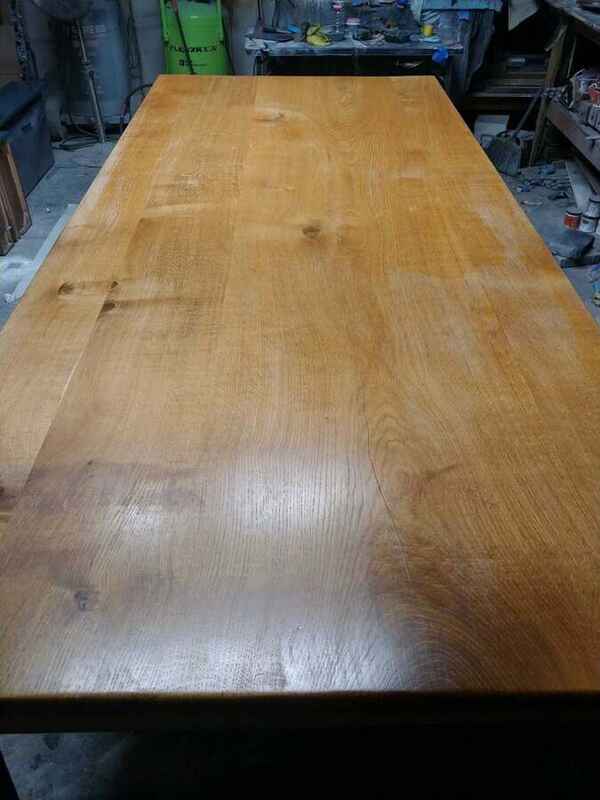
A German-made oak dining table came into the shop wearing its original finish, worn and uneven after decades of use. The first stage of bringing it back was stripping the top all the way down to bare wood, ready for a fresh finish.
Before: the table as it arrived, in its original worn finish.
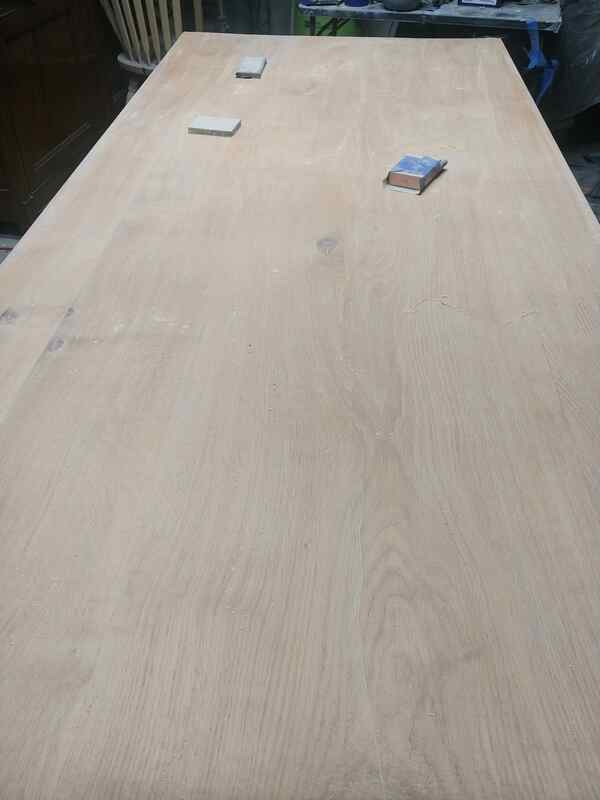
Stripping a finish like this properly means carefully stripping and hand sanding the wood to make sure every trace of the old finish is removed, leaving a clean, even surface. It is a slower, more careful process by hand than it looks, but it is what preps the wood for a consistent staining process next.
Midway through: the top sanded back to bare oak, ahead of a final pre-sanding pass prior to staining.
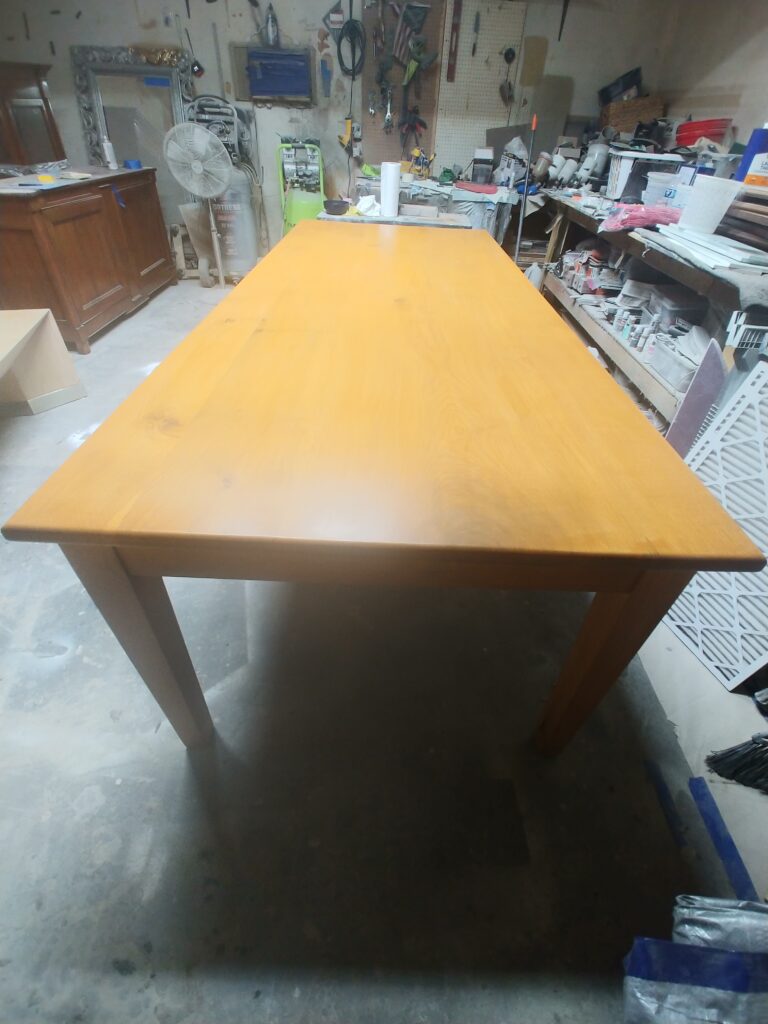
After: the same table, refinished with a hand-mixed gold ochre pigment, in keeping with how a piece like this would originally have been finished.
Gold ochre is one of the oldest pigments used in wood finishing, and getting a historically accurate version of it means mixing the pigment by hand rather than reaching for a modern equivalent off a shelf. It is worth knowing what a piece originally wore before deciding what it should wear next.
A German-made oak dining table like this one is exactly the kind of piece worth this kind of care — solid, well-built, and worth doing properly rather than rushing to the next step.
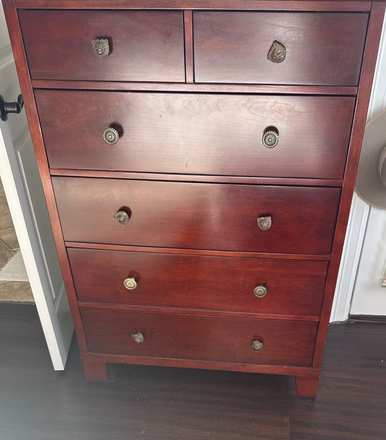
This tall cherry chest of drawers came in with a warm, traditional finish and a mismatched set of vintage pulls — the kind of piece built to last, but overdue for a change. The client chose a glossy Hale Navy lacquer, a color that shifts between deep blue and soft gray depending on the light in the room, and we took the chest down to bare wood to spray it.
The Piece
A classic six-drawer tall chest: two short drawers across the top and four full-width drawers below, set on tapered bracket feet. The original cherry-toned finish was still in good shape, but the hardware told the story of a piece that had been added to over the years — lion-head pulls on some drawers, floral rosette knobs on others, and a pair of plain knobs on the bottom. No two rows quite matched.
Before: the chest in its original cherry-toned finish with mismatched vintage hardware.
Why Hale Navy
The client picked Hale Navy for its range — it isn’t a flat, one-note color. Under warm lamp light it reads almost black-blue; in daylight it opens up into a soft blue-gray. That shift is what makes it work on a traditional case piece like this one: it reads as a deep, versatile neutral rather than a bold accent color, so the chest can sit comfortably in a lot of different rooms.
A Gilded Bridge to New Hardware
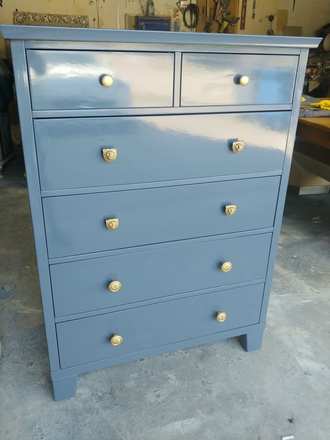
The client has new pulls on order, but rather than leave the chest looking unfinished while they’re in transit, we gilded the existing hardware — the same lion-head and floral rosette pulls, brought up to a bright brass finish so they read as intentional against the new color instead of leftover. It’s a placeholder that still looks complete, and the pulls will be swapped for the new set as soon as it arrives.
After: the same chest finished in a high-gloss Hale Navy lacquer, with the original pulls gilded in brass as a bridge to new hardware.
Same Piece, New Finish
Nothing about the chest’s proportions or joinery changed — same tall six-drawer silhouette, same tapered feet. The transformation here is a lacquer-grade sprayed color and gilded hardware, not a rebuild, with new pulls still to come.
Is Hale Navy Right for Your Piece?
Hale Navy works especially well on traditional case pieces with some age to them — dressers, chests, and tallboys where the goal is a deep, versatile color rather than a stark white or another coat of brown stain. See our custom painting & lacquer services or send us a photo of your piece for a free color consultation.
Send Us a Photo for a Free Estimate
Have a chest, dresser, or other case piece that needs a fresh finish? Send a few photos using the form below and we will tell you exactly what it needs, what we would do, and what it would cost. Estimates are free, and pickup and delivery are available across the Dallas area.
The English Refinisher – fine wood and furniture refinishing, by hand in Dallas, Texas. Serving Dallas, Wylie, and surrounding communities by appointment.
Gilding is the oldest decorative finish still practised by hand, and it is the one that separates a restored piece from a repainted one. Real gold leaf, silver, or composition (imitation leaf) — is laid onto a prepared surface in sheets thinner than a human hair. It catches light in a way paint cannot imitate, because it is not a colour. It is metal.
The English Refinisher gilds frames, mirrors, carvings, corbels, mouldings and furniture across the Dallas area. Phil trained and worked as a traditional frame maker before moving into full-time restoration, and gilded work has been part of the shop ever since.
This page showcases just a brief selection of gilding to show the capabilities of the shop.
A Gilded Overmantel Carving: Before and After
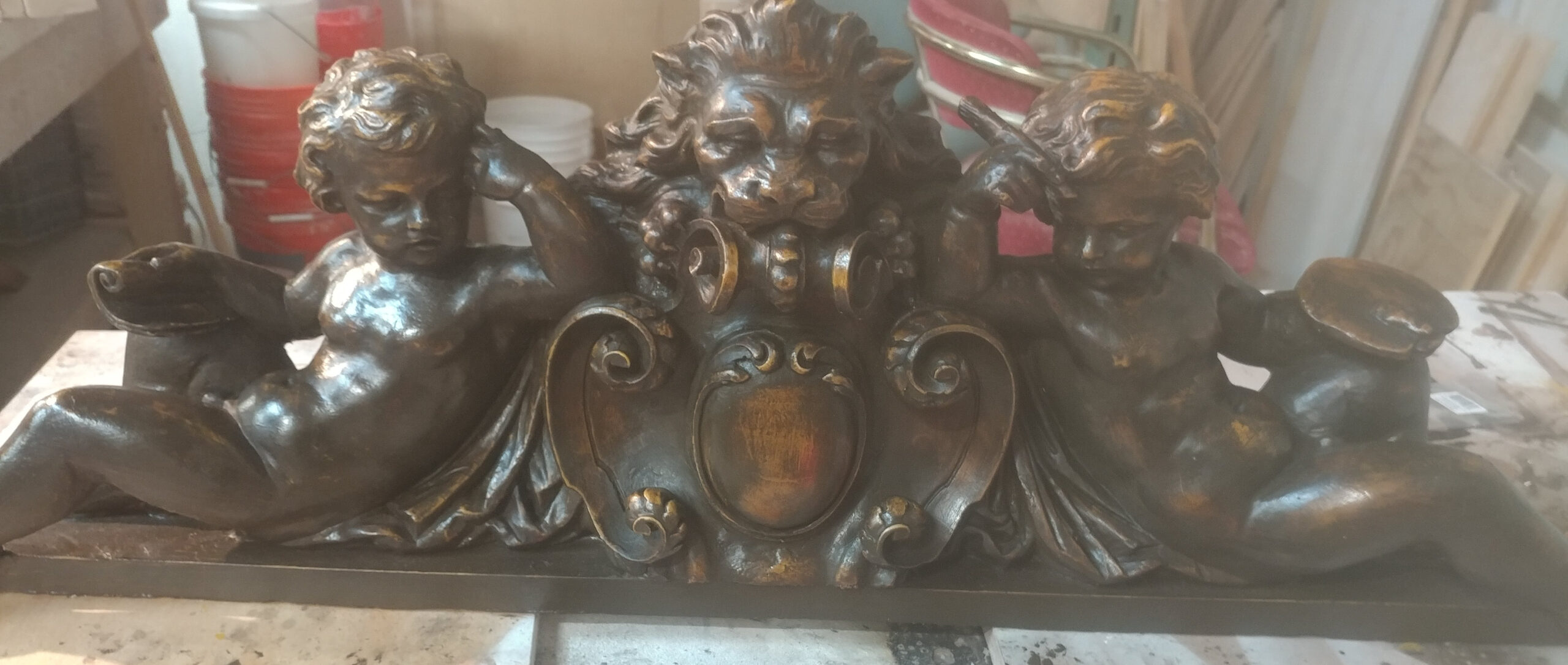
This carved overmantel — two cherubs flanking a lion with scroll, faux painted in an old painted finish. From a few feet away the carving read as a single dark mass; the modelling in the faces, the drapery and the scrollwork had effectively disappeared.
Before — the carving as it came in. The detail is still there; you simply cannot see it.
That is the part worth understanding about a piece like this. Nothing was carved away and nothing was missing. What it had lost was its ability to hold light, and on a deeply modelled carving that loss reads as though the sculpture itself has gone flat.
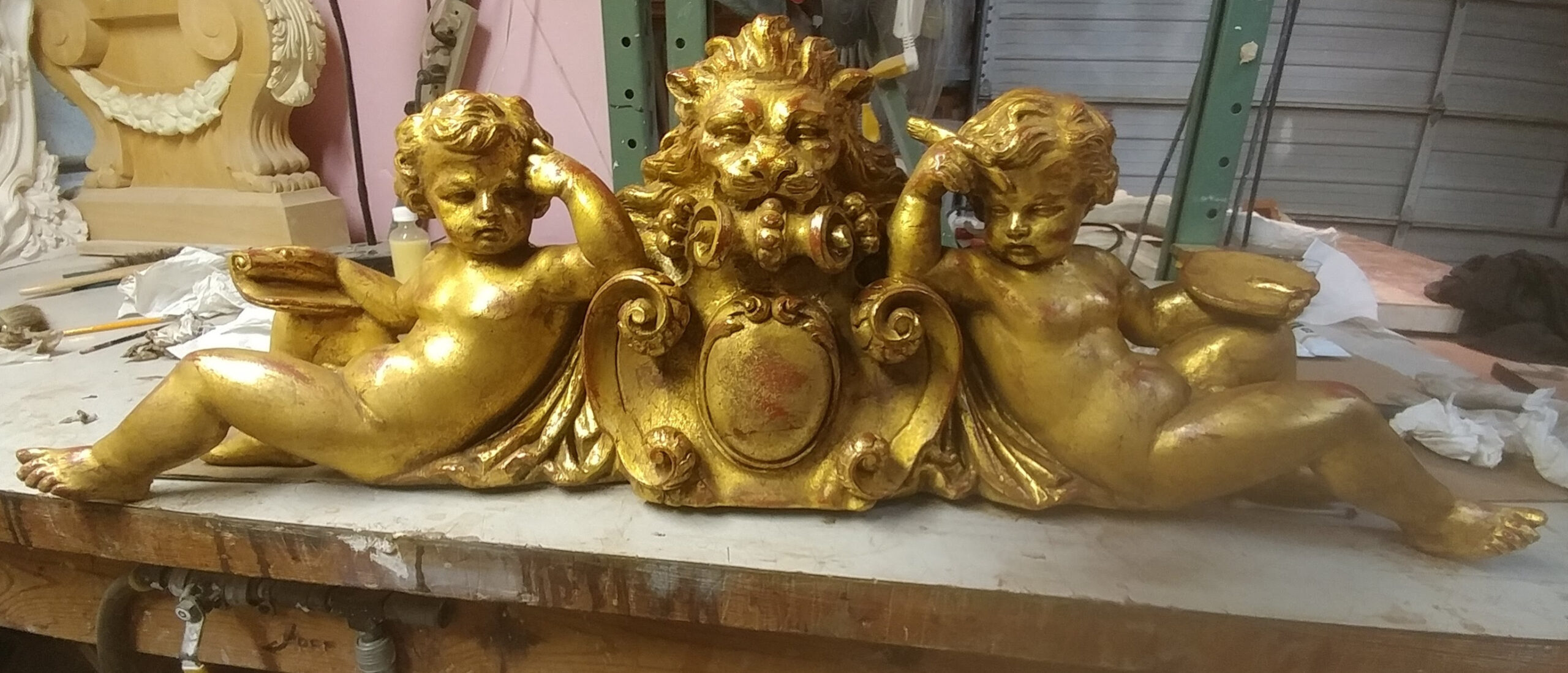
After — gilded, then toned and aged so it does not read as new.
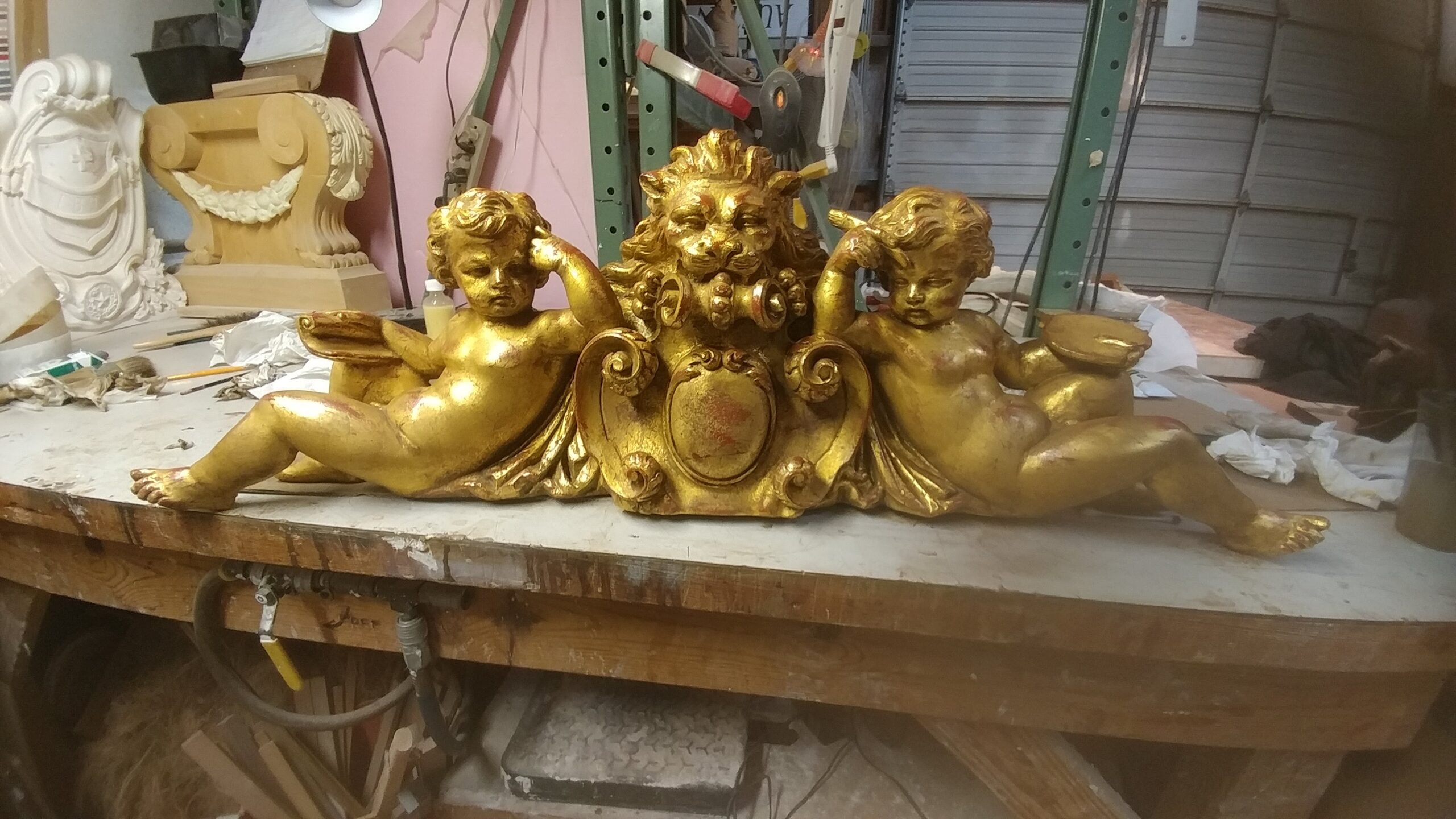
Gilded, the carving comes back. The faces have expression again, the drapery has folds, and the lion mask reads as a lion rather than a shadow. Note that the recesses and the raised forms carry the leaf differently — that variation across the surface is what gives gilded carving its depth, and it is exactly what a coat of gold paint on the same piece would flatten out.
The finished piece on the bench, before it went back to the client.
The finish was toned and aged rather than left bright. A brand-new-looking gold surface on an architectural carving tends to announce itself; the goal here was a piece that looks as though it has been in place a long time.
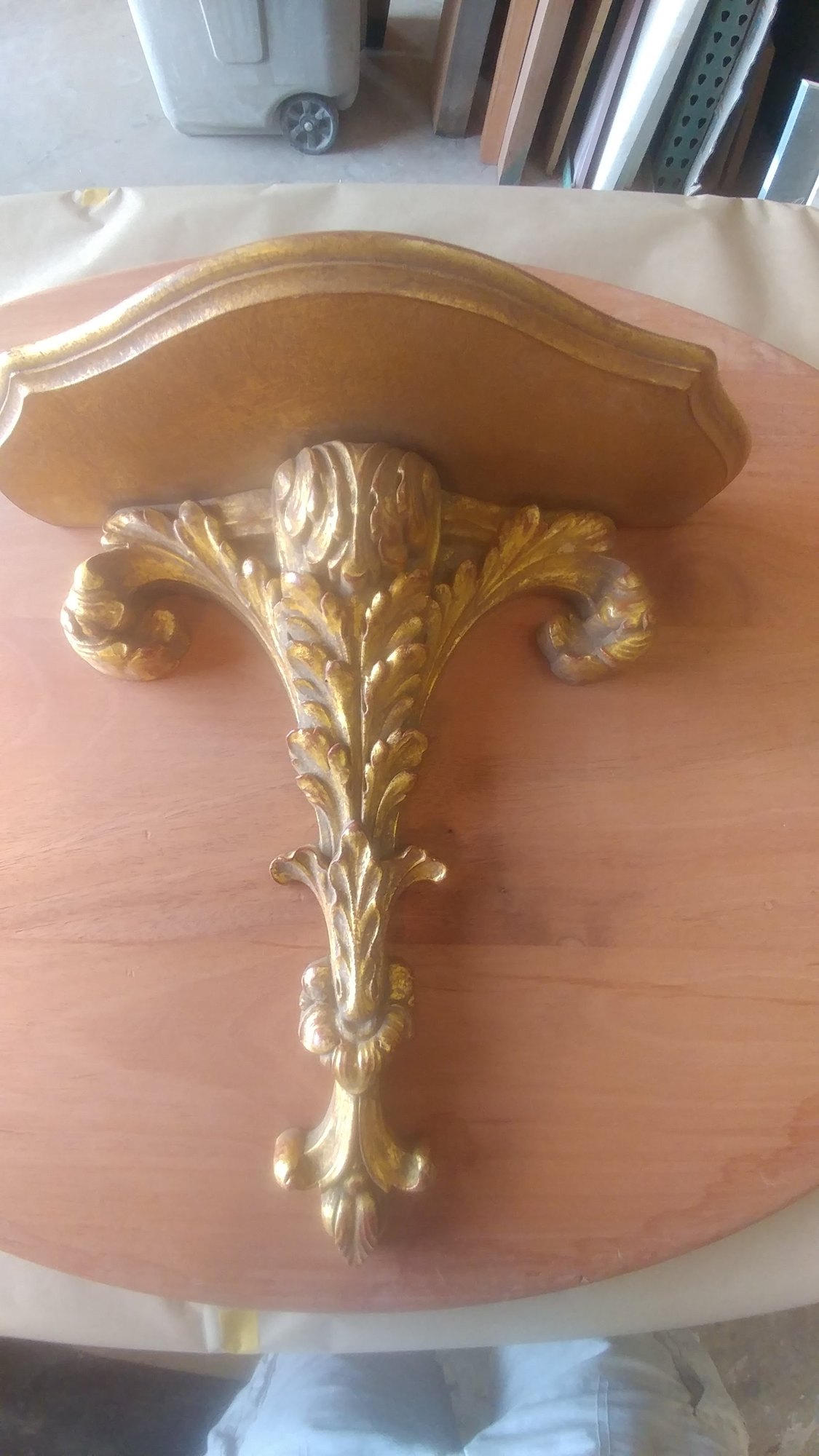
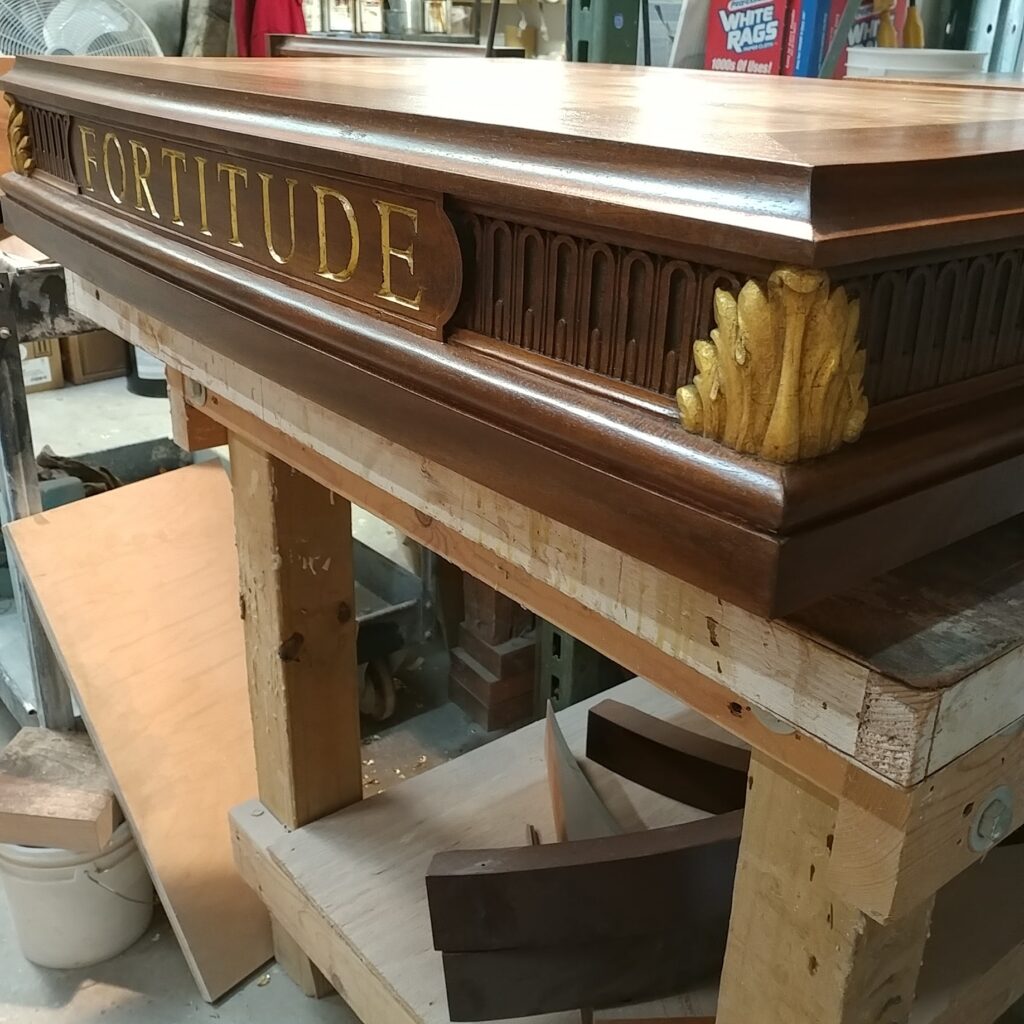
Even the smallest gilded accent can totally transform a piece, whether it’s a base to a statue or accenting a piece of furniture.
Corner Samples and Reference Pieces
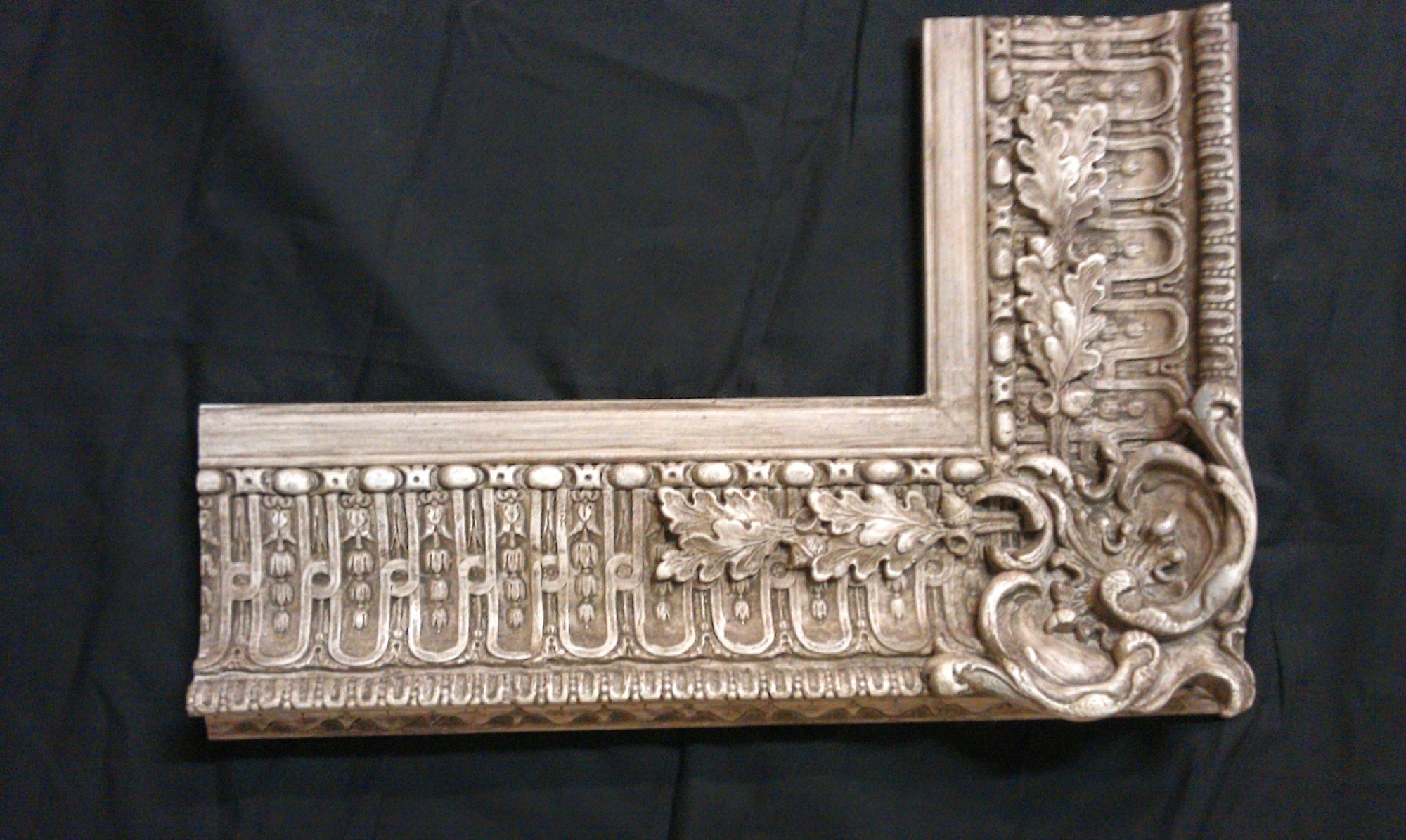
Phil worked as a frame maker before moving into full-time restoration, and several of the samples below are his own original designs from those years. They are kept in the shop as reference for what a gilded surface can be finished to — the range runs a long way further than “gold” or “silver.”
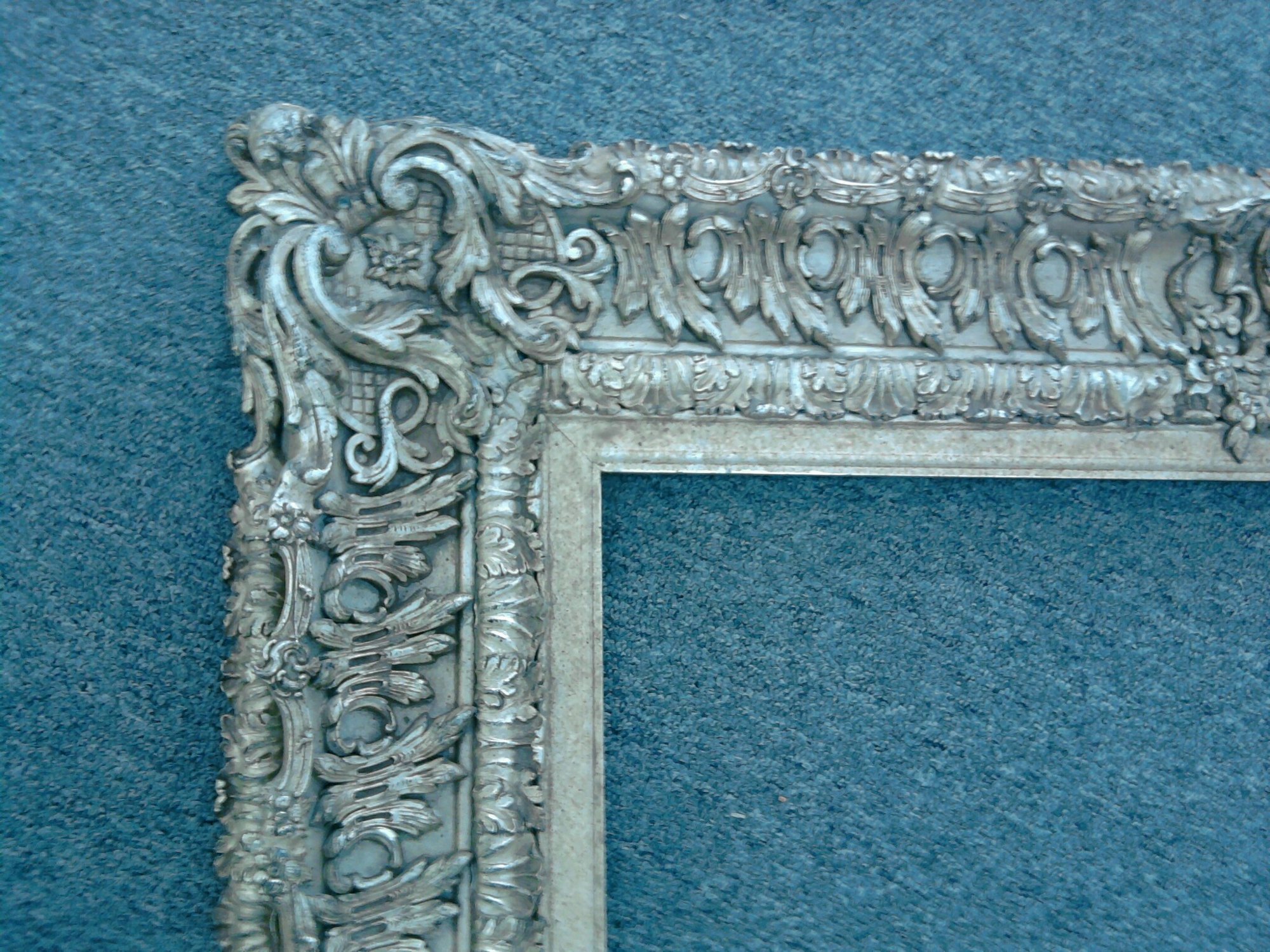
Antique Silver Leaf on a Chippendale Corner
Antique silver leaf over a Chippendale corner sample, aged and antiqued.
Antique silver leaf applied over a Chippendale corner sample, then aged and antiqued. Silver is often passed over in favour of gold, but against cooler paint colours and in rooms with a lot of daylight it does something gold cannot.
The same sample closer in. The toning sits in the recesses, not on the crests.
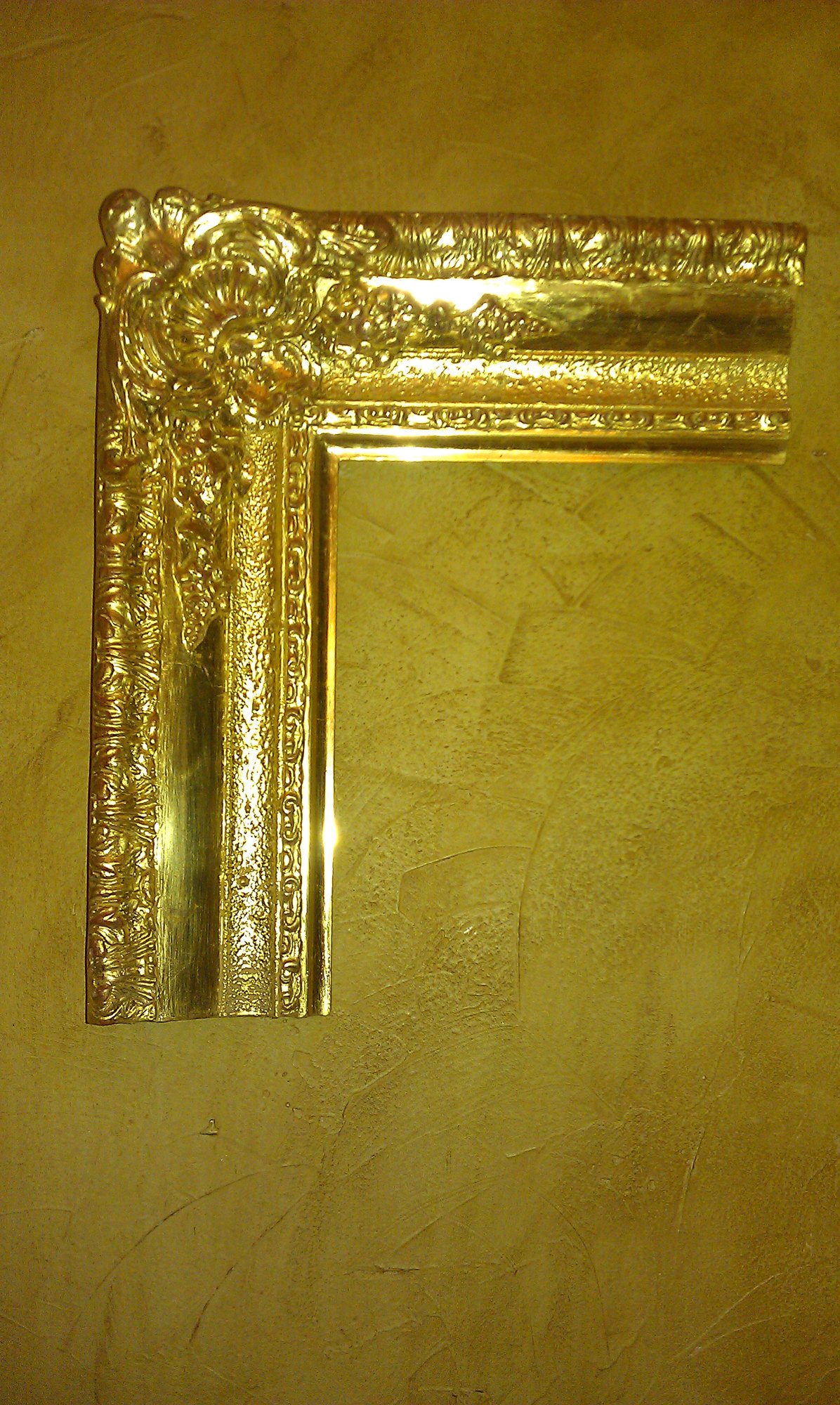
22 Karat, Water Gilded and Burnished, Left Bright
22 karat, water gilded, and deliberately left burnished at the client’s request.
A French corner sample in 22 karat gold, water gilded and deliberately left burnished and brilliant at the client’s request. Most gilded work gets toned back so it reads as old. This one did not — and it is here as the reminder that brightness is a decision, not an oversight.
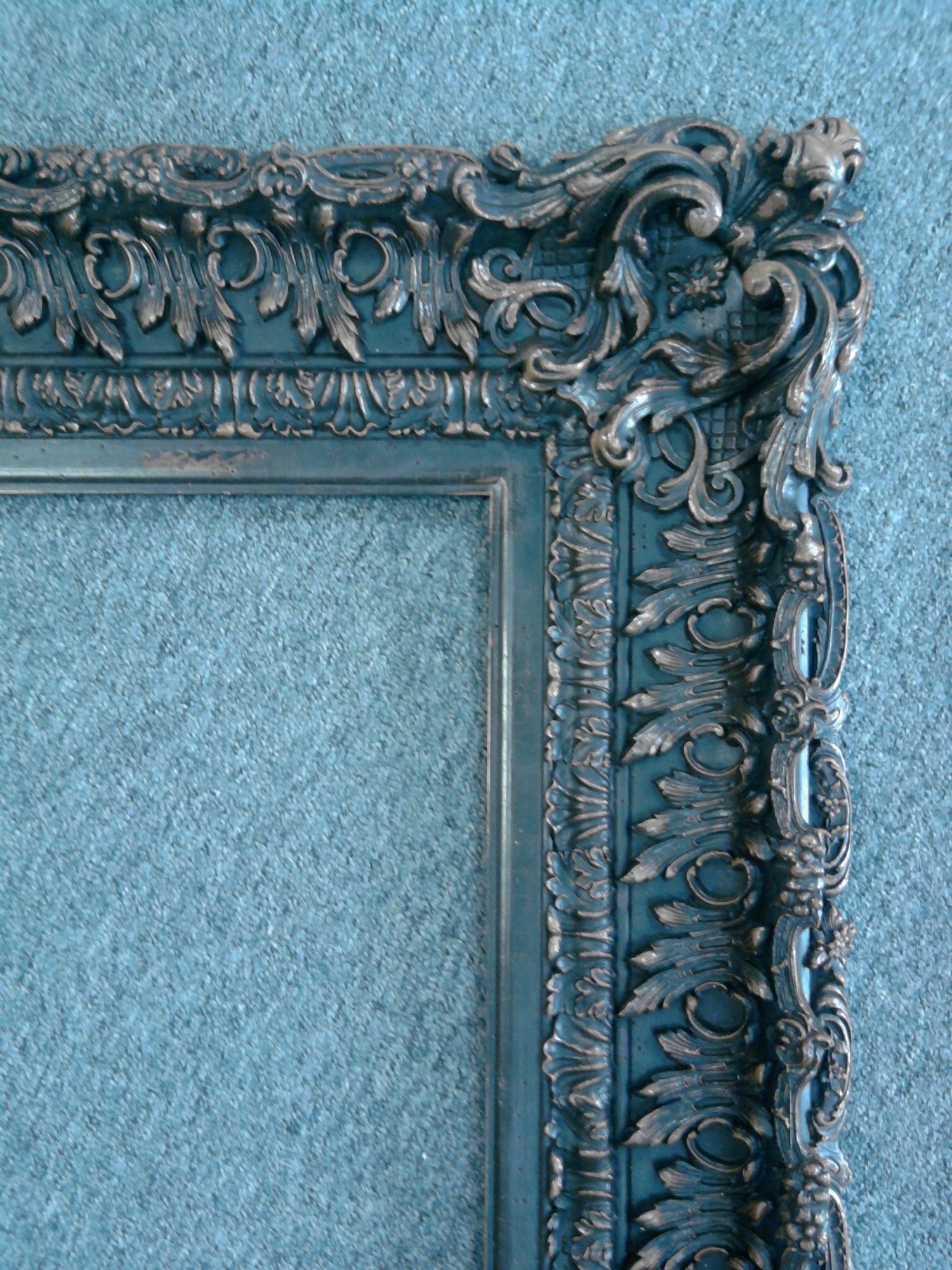
Silver Over Aged Gesso
A fluted corner sample, silvered over aged gesso.
A fluted corner in silver leaf over aged gesso. The same profile in bright silver would read as modern; toned like this it reads as something that has been on a wall for a century.
Frames, Ornament and Architectural Work
Gilded Ornament Against Plain Wood
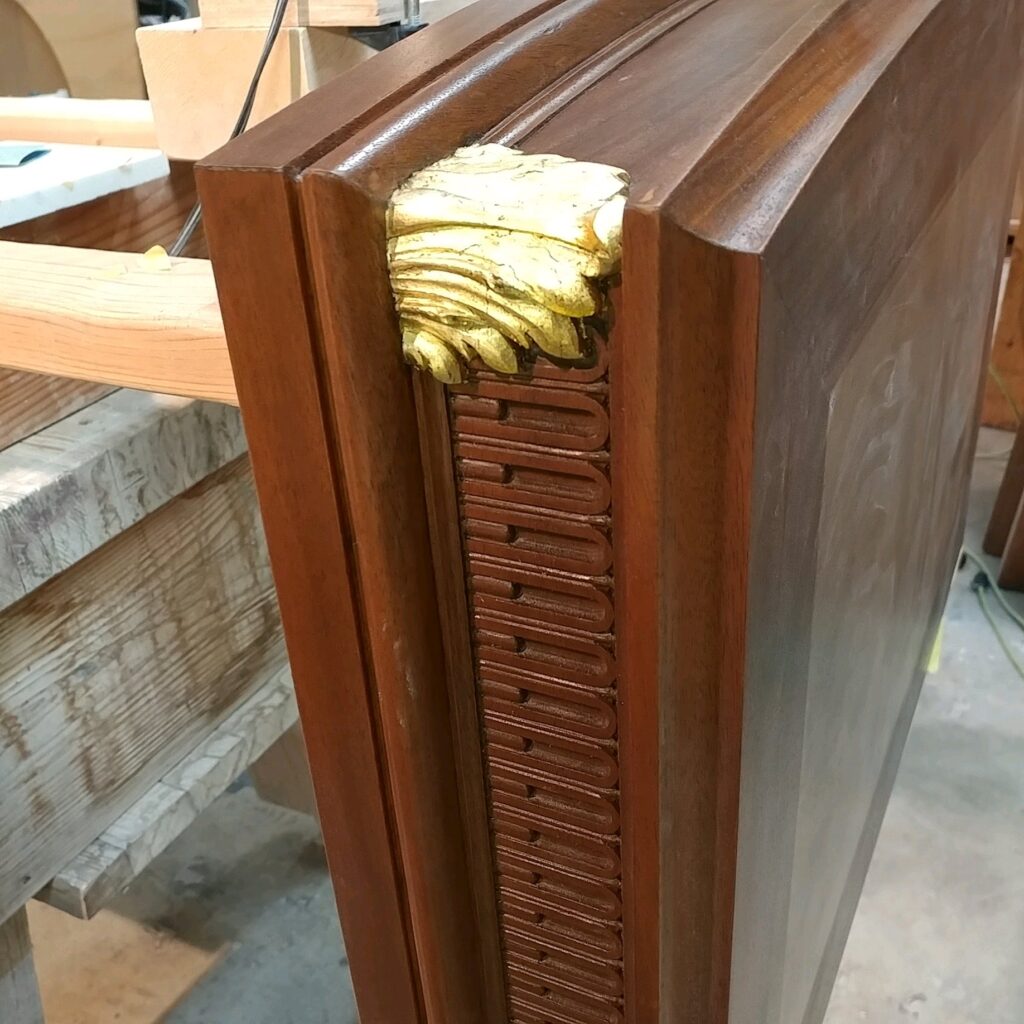
Gilded ornament against plain wood — the contrast is the point.
A carved bracket with its acanthus ornament gilded and the timber left plain. Set side by side like this the difference is not subtle, and it is the clearest short answer to what gilding actually does to a piece: it separates the ornament from the ground so the carving reads.
Close Work
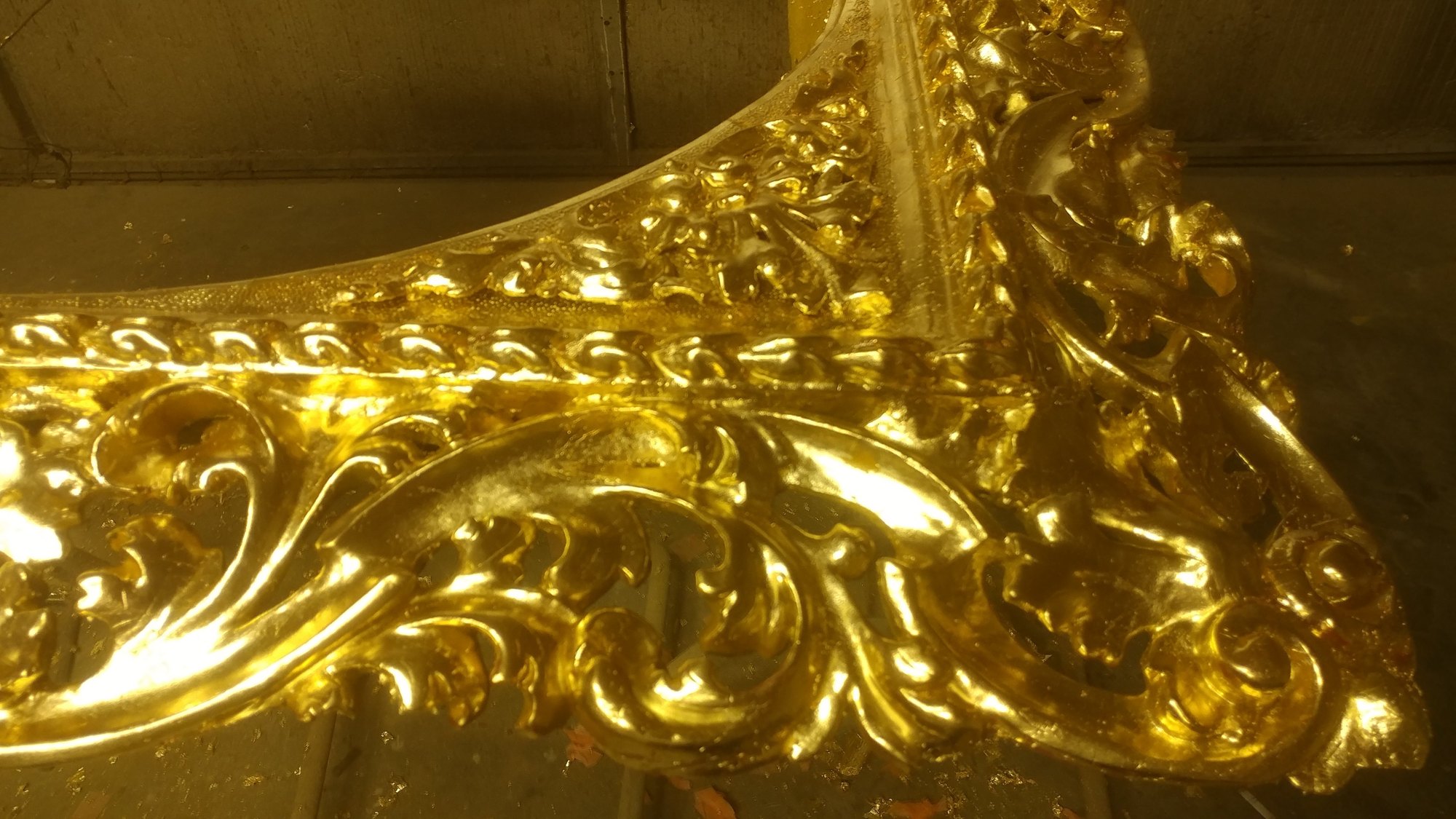
Close up of intricate gilding. Light does the work here, not colour.
Ornament at this scale is where gilded work is either convincing or obviously not. There is no colour in this photograph doing the job — it is all refraction off metal, which is exactly what gold paint cannot reproduce.
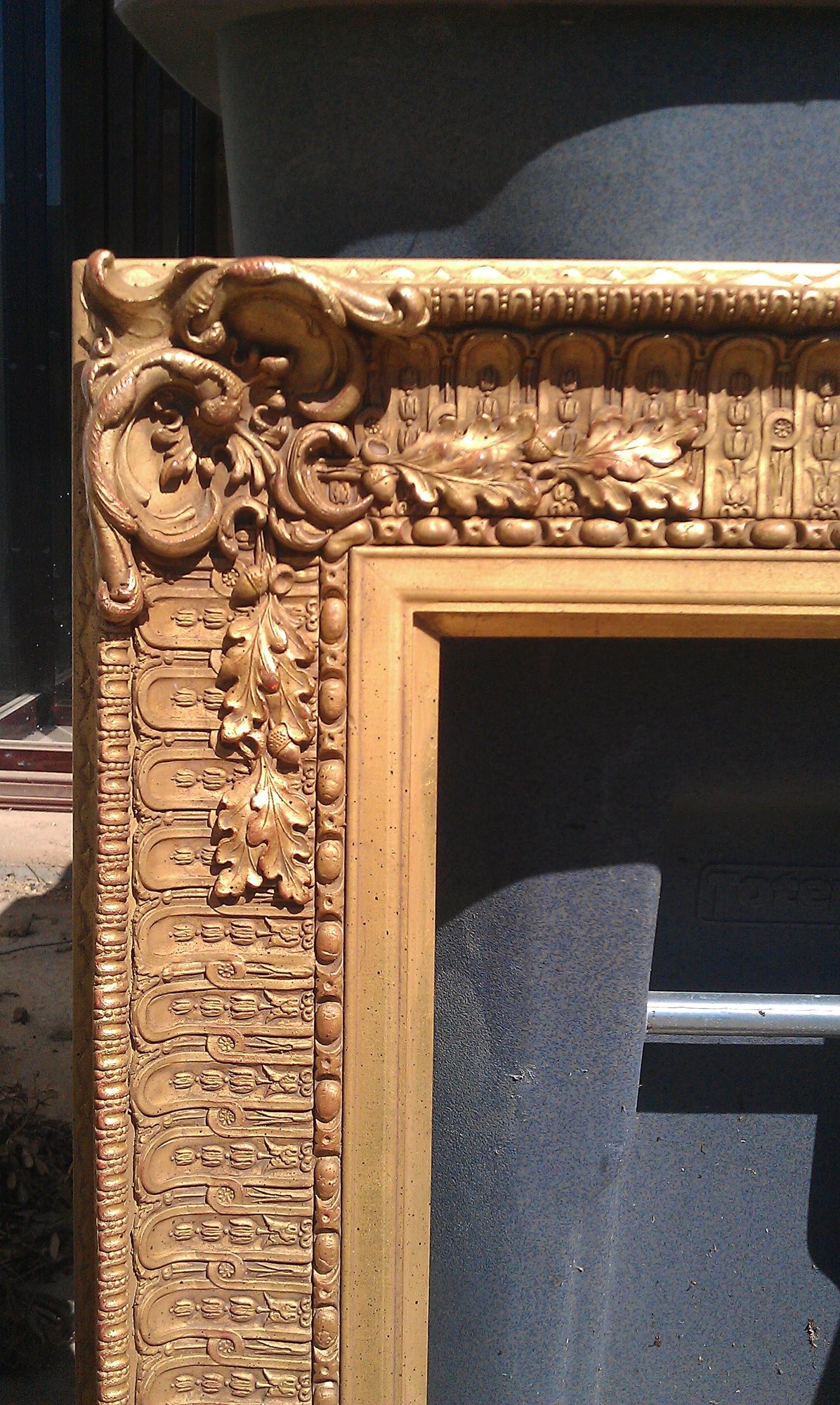
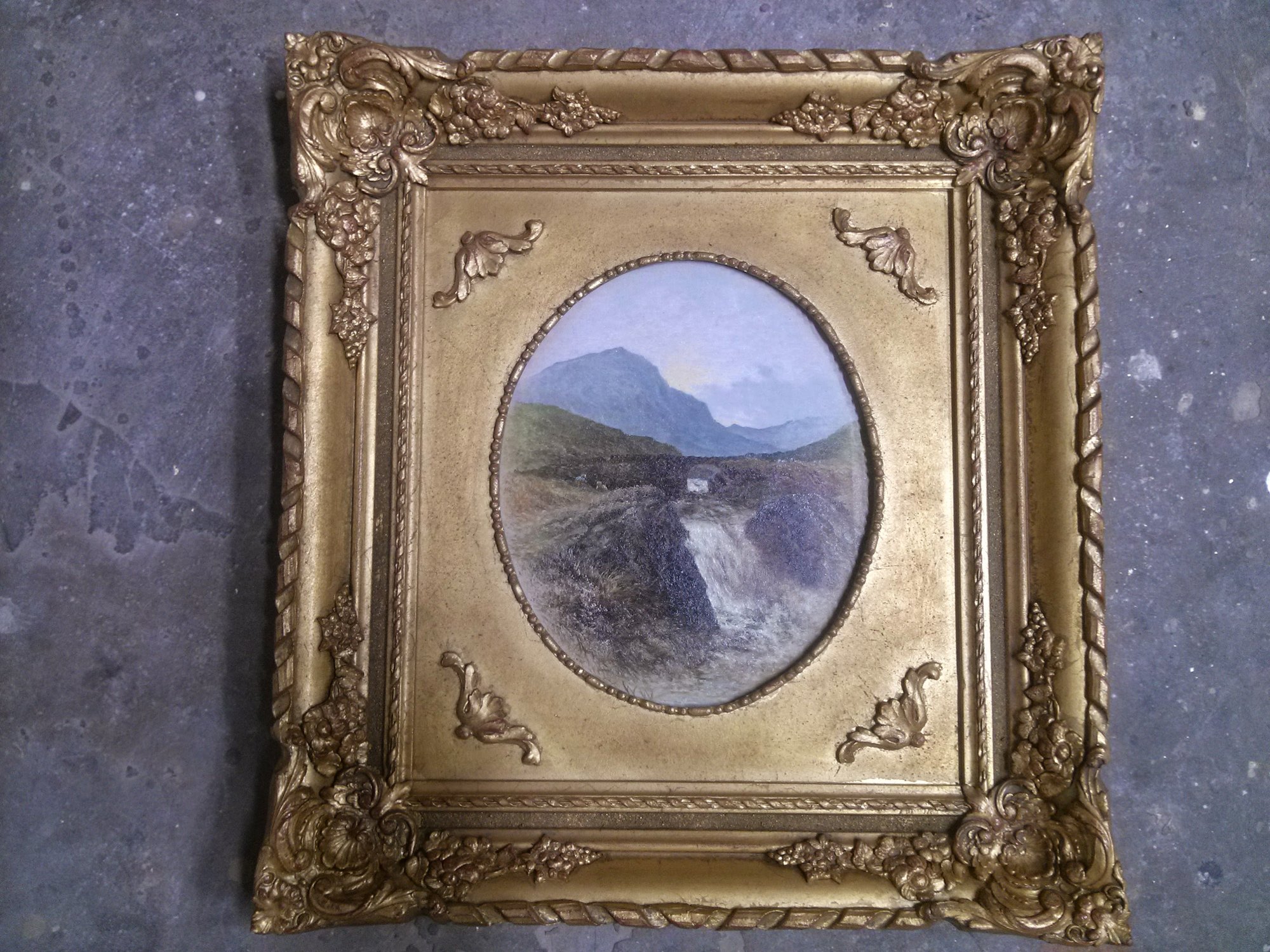
A frame corner toned to a warm, aged gold.
Frames Back in Service
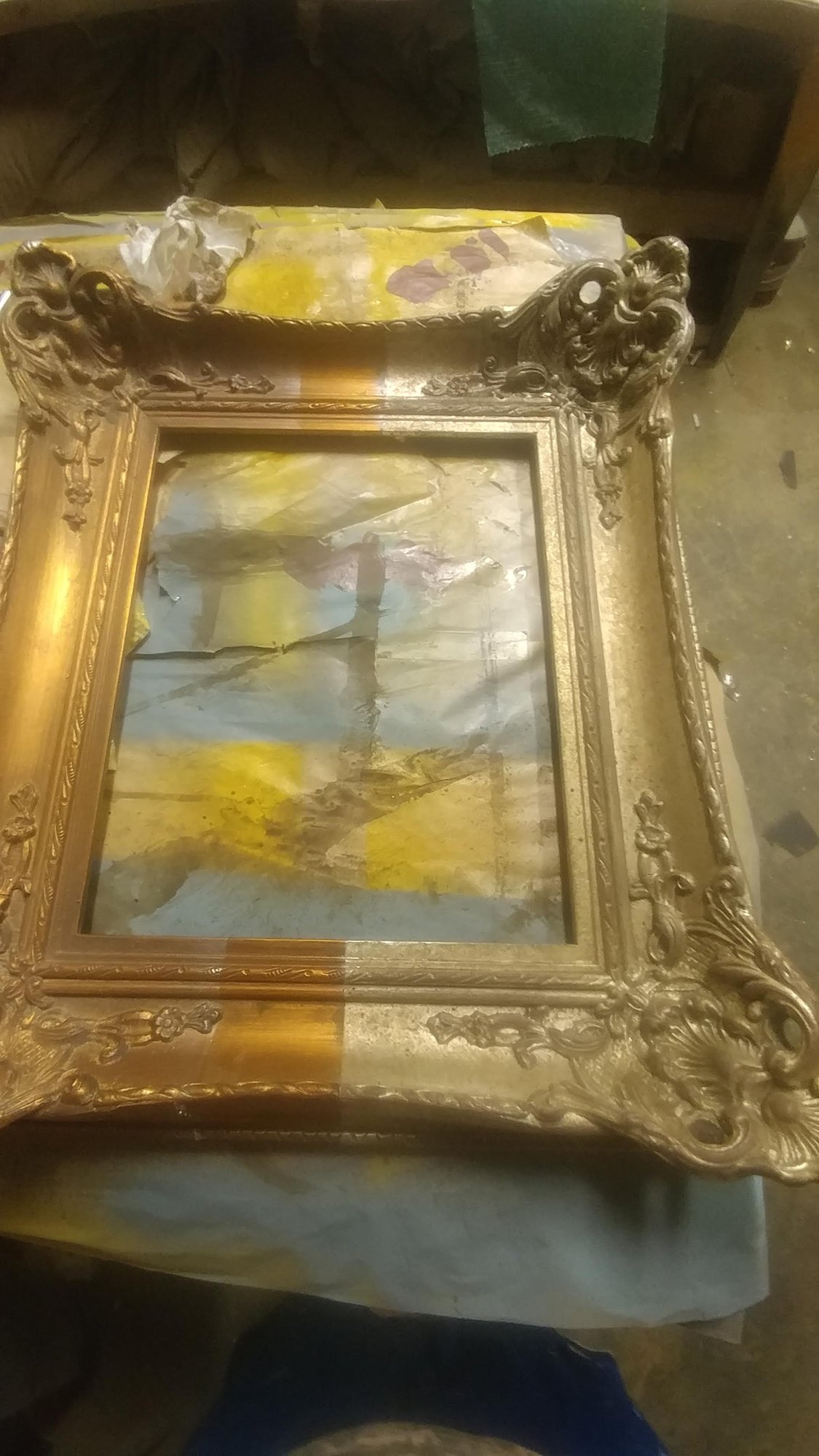
A re-gilded frame sample, before and after on the same frame — left side commercial finish, right side imitation gold leaf applied and toned/aged to show the transformation.
This gilded frame with spandrel started out as raw wood. Ornate composition ornament was applied and prepped for the final composition leaf, then aged and toned.
The completed frame.
Roman Gilding / Powder Gilding
Alongside gold and silver leafing, the shop also offers Roman gilding, also known as English powder gilding, a rare technique from Victorian England. See how a demilune cabinet and its matching mirror went from flat silver paint to antiqued gold in this Roman gilding project. For everything the shop offers, see the gilding services page.
Send Us a Photo for a Free Estimate
Have a gilded frame/mirror to be re-gilded or restored, or accenting
fixtures or furniture? Send a few photos using the form below and tell us exactly what it needs. Estimates are free, and pick up/delivery are available across the Dallas and surrounding areas.
The English Refinisher – fine wood and furniture refinishing, by hand in Dallas, Texas. Serving Dallas, Wylie, and surrounding communities by appointment.
Most people do not call us about a butcher block until they have already given up on it. It sits in the corner of the kitchen doing its job, collecting stains and knife marks year after year, until one day they look at it properly and think: that thing is ruined.
It almost never is.
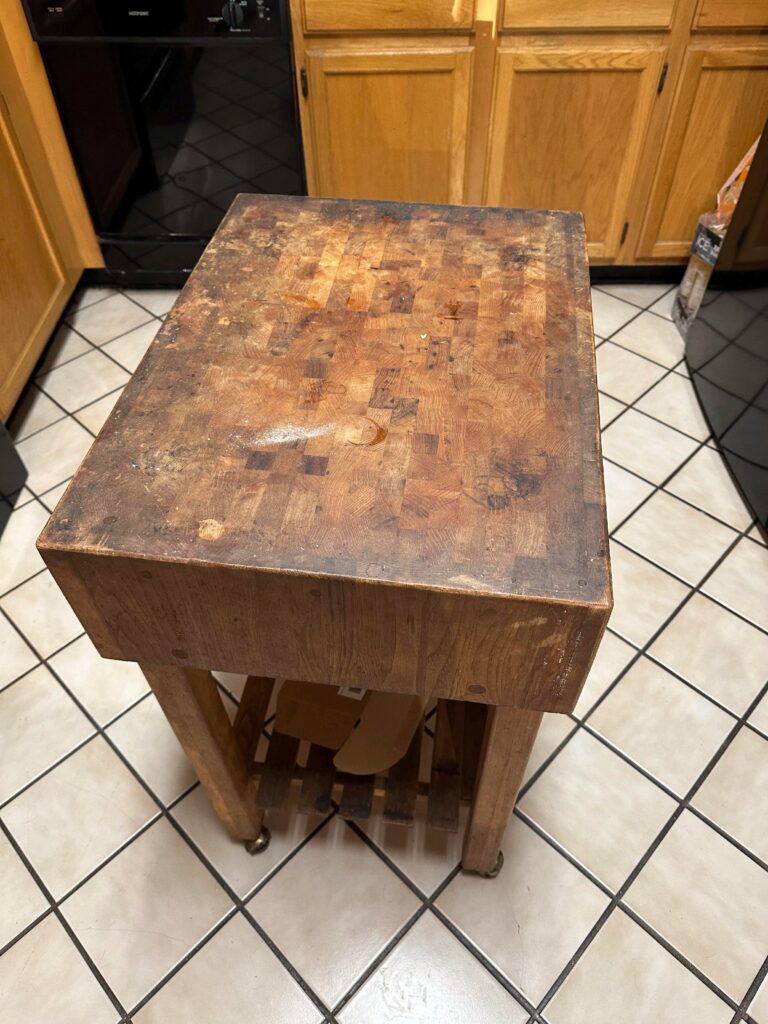
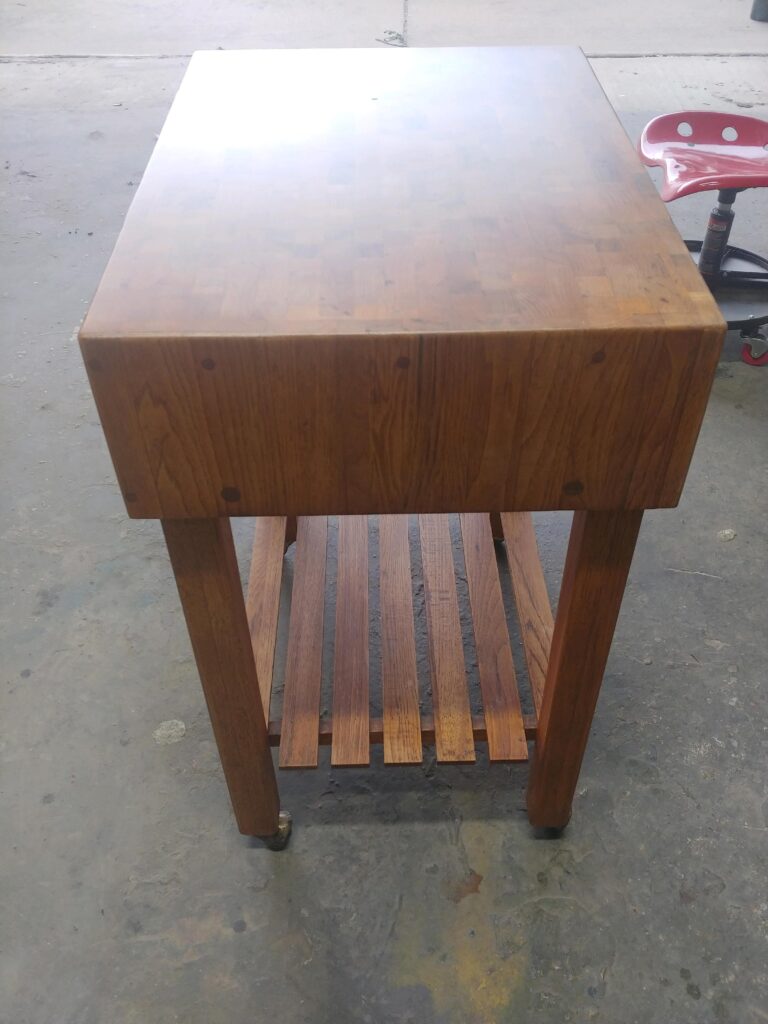
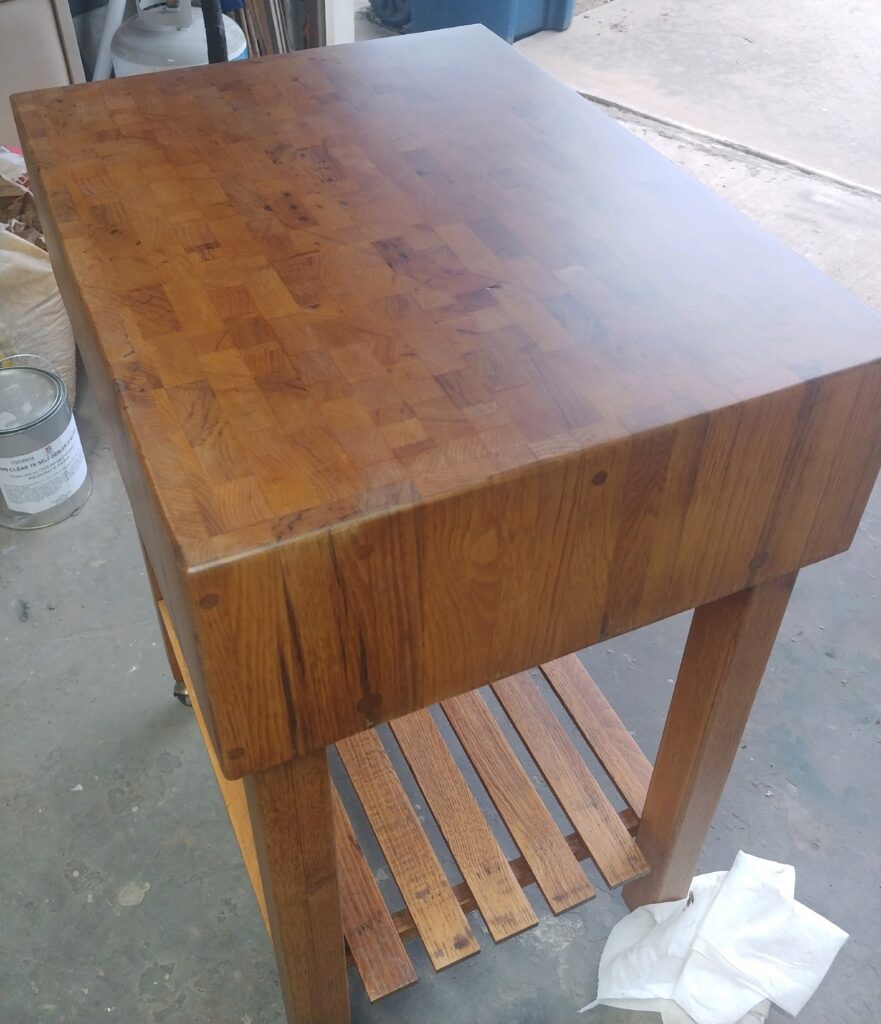
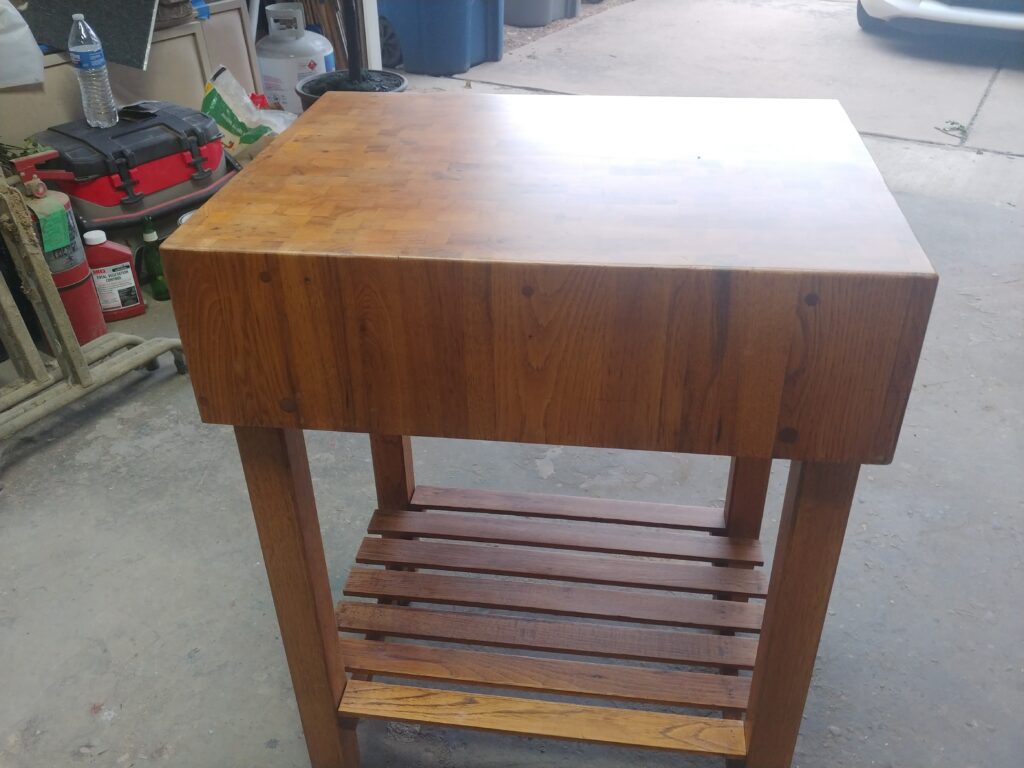
Before: the piece as it arrived – grey, blotched, and written off.After: the same piece, with the legs, aprons, and slatted lower shelf finished to match the top.
This piece came to our shop looking about as tired as solid wood gets – a heavy end-grain butcher block cart, grey and blotched across the top, with dark rings, paint flecks, and decades of grease worked deep into the grain. Underneath all of that was a beautifully built piece of oak furniture that had simply never been maintained. Here is what it took to bring it back.
The Piece: A Solid End-Grain Butcher Block Cart
This is a classic butcher block on a stand – a thick end-grain top mounted on four square tapered legs with a slatted lower shelf and casters. The top is roughly four inches of laid-up hardwood, oak by the look of the ray fleck on the aprons, assembled in the checkerboard pattern that gives end grain its distinctive look.
That construction matters. End grain means the boards are stood on end so a blade cuts into the tips of the wood fibres rather than across them. The fibres part under the knife and close back up, which is why end-grain blocks are gentler on edges and far more durable than the edge-grain slabs sold as budget countertops. It is also why they soak up everything – oil, wine, water, dish soap – like a bundle of drinking straws standing upright.
A block like this is genuinely worth restoring. A comparable new one would cost more than the refinishing, and it would not have the density, the patina, or the joinery.
Before: What Decades of Kitchen Duty Look Like
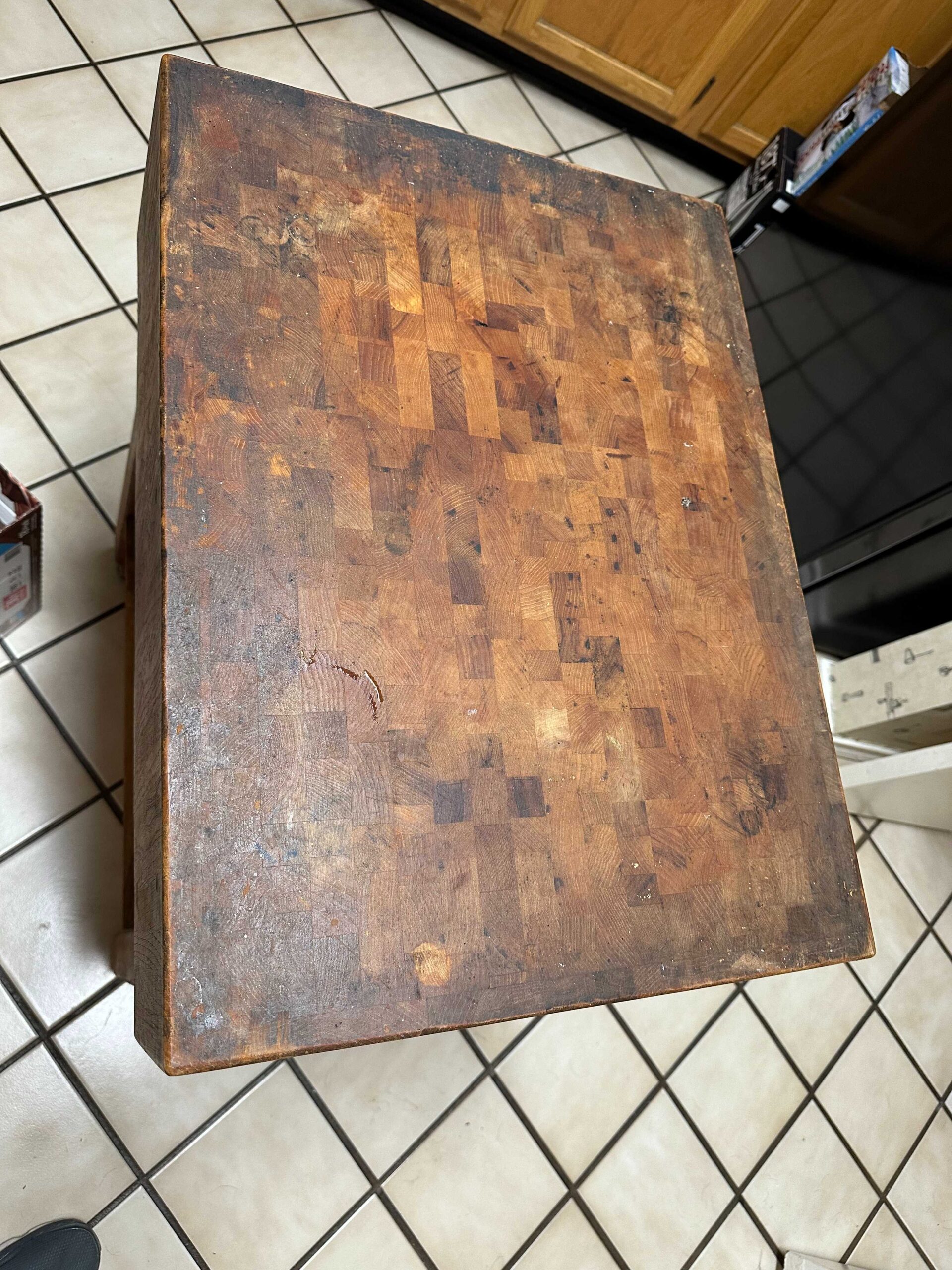
Those photos are exactly how the piece arrived – no cleaning, no staging. Seen from above, the top had gone grey and blotchy, with dark staining, paint spatter, and grease worked deep into the open end grain.
The damage broke down into four categories, and each one gets handled differently:
Surface grey. The top layer of wood had oxidised and gone silvery from UV and moisture. This is shallow – usually the first fraction of a millimetre.
Deep staining. The dark rings and blotches were liquids that had wicked into the end grain, sometimes an eighth of an inch down. Sanding alone does not always reach these.
Grease saturation. Cooking oils that never fully cure. This is the one that ruins a refinish if you do not deal with it, because a new finish will not bond over contaminated wood.
Mechanical damage. Knife scoring, dents, paint flecks, and a few small chips at the edges. Straightforward, if tedious.
How We Refinished It, Step by Step
1. Assessment
Before any abrasive touches the wood, the piece gets checked over: are the legs still tight in their mortises, are the casters sound, is the top cupped or cracked, how much material can safely come off. A four-inch end-grain top has enormous reserves – you can take a serious amount off and still have decades of life left – but a thin edge-grain countertop may only have a millimetre or two to give.
2. Degreasing and stripping
The old finish and the surface contamination come off first. Sanding straight into a greasy top just drives the contamination deeper and clogs abrasives in seconds. The block gets stripped and cleaned back to bare, dry wood, then left to fully off-gas before anything else happens.
3. Flattening and sanding the end grain
This is the heart of the job, and end grain behaves nothing like face grain – it cuts unevenly, it glazes over if you lean on it, and it records every mistake permanently. The top is brought genuinely flat first, then worked through a full progression of grits, each one fully removing the scratch pattern of the one before it, with the surface cleaned and inspected under raking light between every pass.
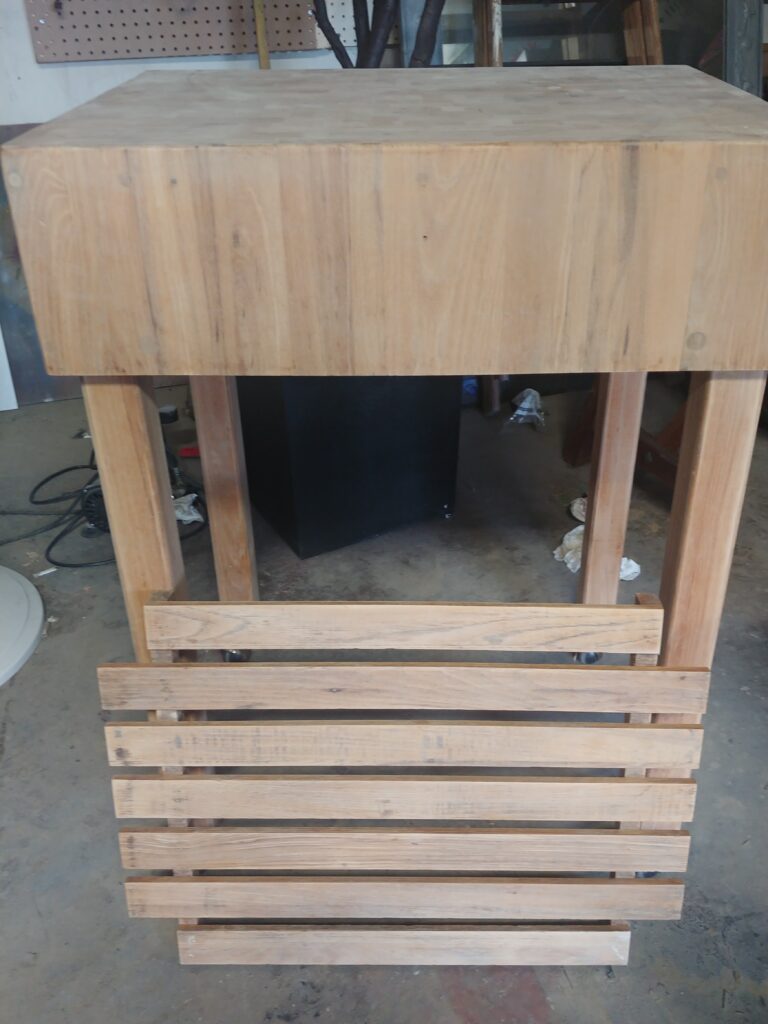
Mid-restoration: stripped and sanded back to bare oak, with the shelf slats removed so every face could be worked separately.
Deep stains that survive the flattening get spot-treated and blended rather than chased with more sanding – chasing a stain is how a top ends up dished, and a dished top cannot be sanded back to flat without losing a great deal more wood than it needed to.
The legs, aprons, and slatted shelf are taken down and sanded by hand. The slats especially: each one has four faces and two ends, and no shortcut exists.
4. Colour and grain
Once the surface is clean and flat, the natural colour comes back on its own. The photos below are not stained – that warm honey-and-caramel checkerboard is just oak with the grey removed. Where a piece has irreparable dark patches, we colour-match and blend so the eye reads them as figure rather than damage.
5. Choosing the right finish
How you use the block decides the finish, and there is no single right answer.
If you cut directly on it, it needs a food-safe penetrating finish: food-grade mineral oil, or an oil-and-beeswax blend. These soak in rather than sitting on top, they never chip or peel, and they are renewed by simply wiping more on every month or two. The trade-off is far less protection against water rings and staining.
If it lives as a table, island, or work surface and the cutting happens on a board, a durable clear topcoat is the better choice. It builds a protective film that resists water, wine, and grease, keeps the surface easy to wipe down, and holds the colour of the wood. That is the route this piece took.
We ask how the piece is actually used before we specify anything. A block that gets a cleaver taken to it and a block that holds a stand mixer are two different jobs.
6. Curing
Finish goes on in thin, even coats with proper cure time between them, and the piece is not returned until it is genuinely hard – not just dry to the touch. Rushing this step is the most common reason a refinished top marks up again within a month.
After: The Result
After: the end-grain checkerboard reads clearly again, with the natural honey and caramel tones of the oak fully recovered.After: the thick end-grain top and the original dowelled joinery, clean and protected again.
The dark staining is gone. The grey is gone. The knife scoring is gone. What is left is the piece the maker actually built – and with a maintained finish on it, it should outlast everything else in the kitchen.
Why a Block Like This Is Specialist Work
End grain is the most unforgiving surface in furniture work, and almost every way it goes wrong is permanent. These are the four failures we are working to avoid on every block that comes through the shop.
A dished top. End grain cuts fast in the middle of a stroke and slow at the edges. Sand it freehand and the centre goes hollow – and once a top is dished, more sanding only deepens it. Flattening it again means taking the whole surface down to the low point, which is material you never get back.
Burnished grain. Push too hard or run too fine too early and the open fibre ends close up and glaze over. Burnished end grain will not accept finish evenly. It shows up as pale, patchy areas after the first coat – by which point the only fix is to start over.
Finish that will not bond. Cooking oil that has soaked into end grain does not sand out. If it is not drawn out properly first, the topcoat goes on beautifully and then lifts, stays tacky, or fisheyes weeks later.
Scratch pattern under the coating. Skip a grit and the marks are invisible on bare wood – then light up like a road map the moment a clear finish goes over them. There is no correcting this without stripping back and starting the progression again.
Add a four-inch top worth of weight, the dust extraction a full flattening actually needs, and controlled conditions for the finish to cure in, and it stops being a garage job. This is what we are set up for, and it is why the result holds.
The other thing experience buys you is judgement: knowing how much material a given top can safely lose, which stains will lift and which need blending, whether a loose leg wants re-gluing or the joint needs to come apart. Those calls get made before the first abrasive touches the wood – and getting them wrong is what turns a repairable piece into a replaced one.
Frequently Asked Questions
Can a badly stained butcher block really be saved?
Almost always. Solid wood is thick, and staining is usually much shallower than it looks. The tops we genuinely cannot save are ones with structural failure – cracked laminations, severe cupping, or rot – not ones that simply look bad.
How much material comes off the top?
As little as necessary. On a thick end-grain block like this one, removing what is needed to flatten and clean the surface makes no meaningful difference to its life. On a thin countertop we are far more conservative.
Is the finish food safe?
It depends on what you choose. Food-grade mineral oil and oil and wax blends are safe for direct food contact and are what we recommend for active cutting surfaces. Film-forming topcoats are appropriate for blocks used as tables and work surfaces where food is not prepared directly on the wood. We walk you through both before we start.
Should I sand it down myself first to save money?
Please do not. Prep is the job – the sanding is the skilled part, not a shortcut to it. A top that has been sanded unevenly, burnished, or dished has to be taken down further than it otherwise would to get flat again, and that costs more, not less. Bring it to us as it is, however bad it looks.
Do you have to take my kitchen island away?
For most pieces, yes – sanding and finishing need controlled conditions and proper dust extraction. We offer pickup and delivery across the Dallas area.
How do I keep it looking like this?
Wipe spills promptly, never let standing water sit on it, and do not soak it. Oiled tops get re-oiled every month or two; sealed tops just need wiping down. Both should stay out of direct, all-day sun. We give you care instructions specific to the finish on your piece.
How long does butcher block refinishing take?
It varies with the condition of the piece and the finish you choose – cure times are the main driver, not labour. We give you a realistic window with your estimate rather than a number we cannot hold to.
Have a Butcher Block Worth Saving?
We are a Dallas-area wood and furniture refinishing studio, and this is exactly the kind of work we do: butcher block tops and islands, antique and heirloom furniture, dining tables, cabinetry, doors, and built-ins. English-trained craftsmanship, honest advice about whether a piece is worth restoring, and pickup and delivery available across the area.
Estimates are free. Send a few photos of your piece using the form below and we will tell you exactly what it needs, what we would do, and what it would cost. However far gone it looks – that is usually not the problem you think it is.
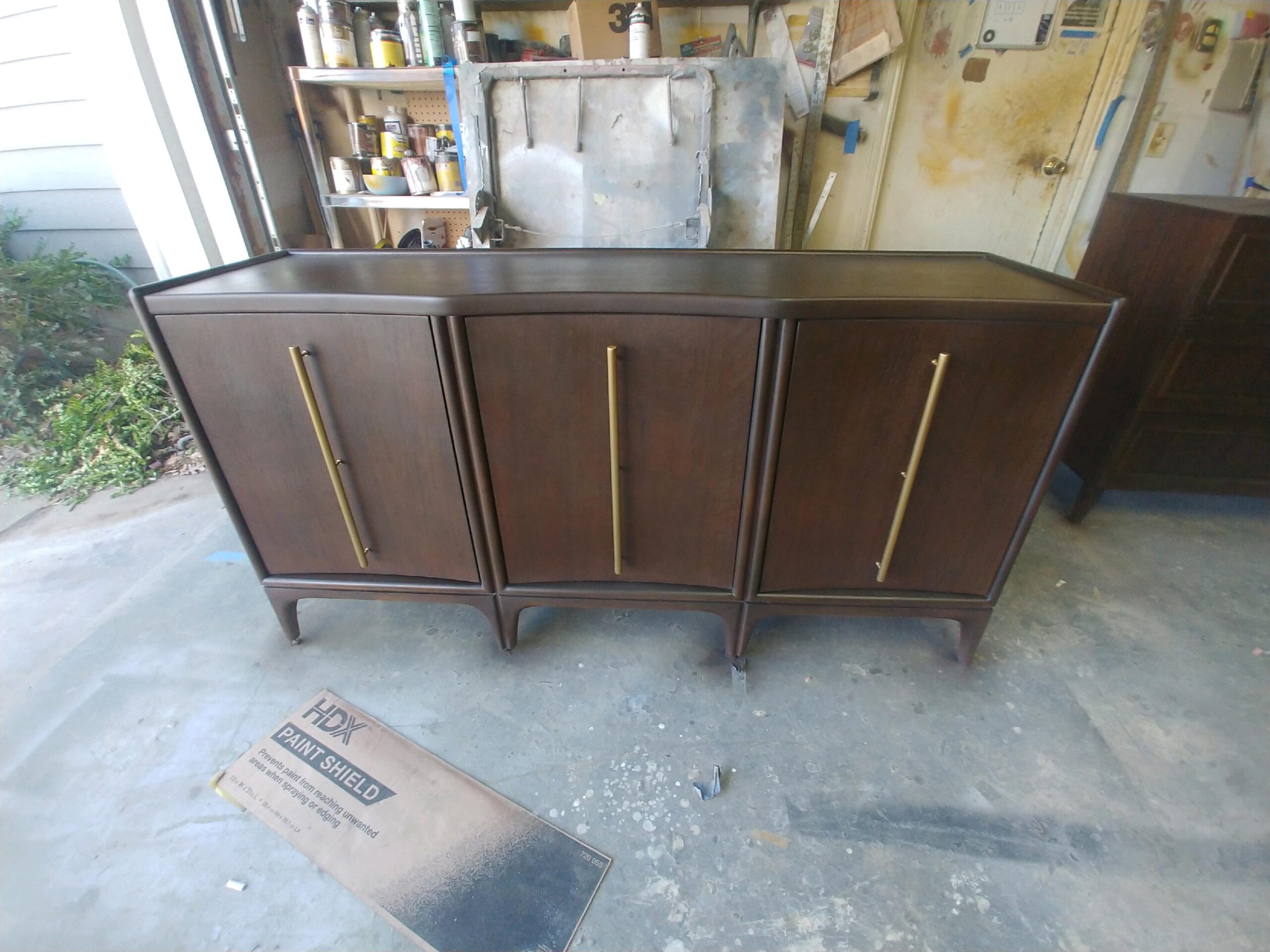
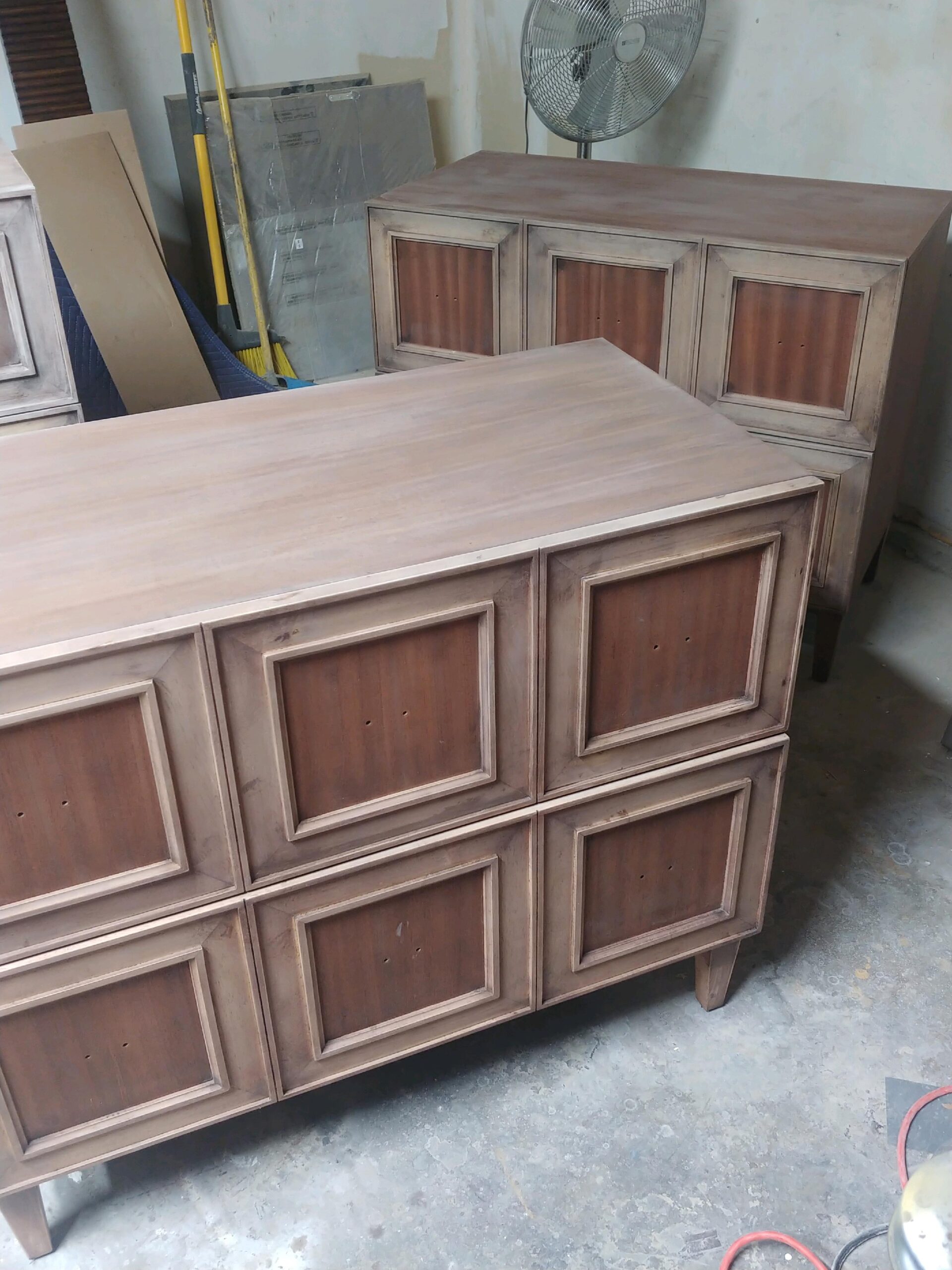
This mid-century three-door credenza came to us stripped down to bare wood, left with an uneven, blotchy base coat — a common in-progress stage before the final color is built up.
The Piece
A classic mid-century case piece: three cabinet doors, tapered legs, and long brass pulls running the full height of each door — the kind of silhouette that anchors a dining room or entryway.
Before & After
We took the credenza back to raw wood, then built up an even, rich walnut-toned finish across all three doors and the case, replacing the blotchy base coat with a warm, consistent color that highlights the grain. The original brass hardware was cleaned and reinstalled to finish the piece.
Considering a Credenza Refinish?
Mid-century case pieces like this one are some of our most requested restorations — see our mid-century refinishing services or send us a photo of your piece for a free estimate.
Send Us a Photo for a Free Estimate
Have a mid-century piece that needs attention? Send a few photos using the form below and we will tell you exactly what it needs, what we would do, and what it would cost. Estimates are free, and pickup and delivery are available across the Dallas area.
The English Refinisher – fine wood and furniture refinishing, by hand in Dallas, Texas. Serving Dallas, Wylie, and surrounding communities by appointment.
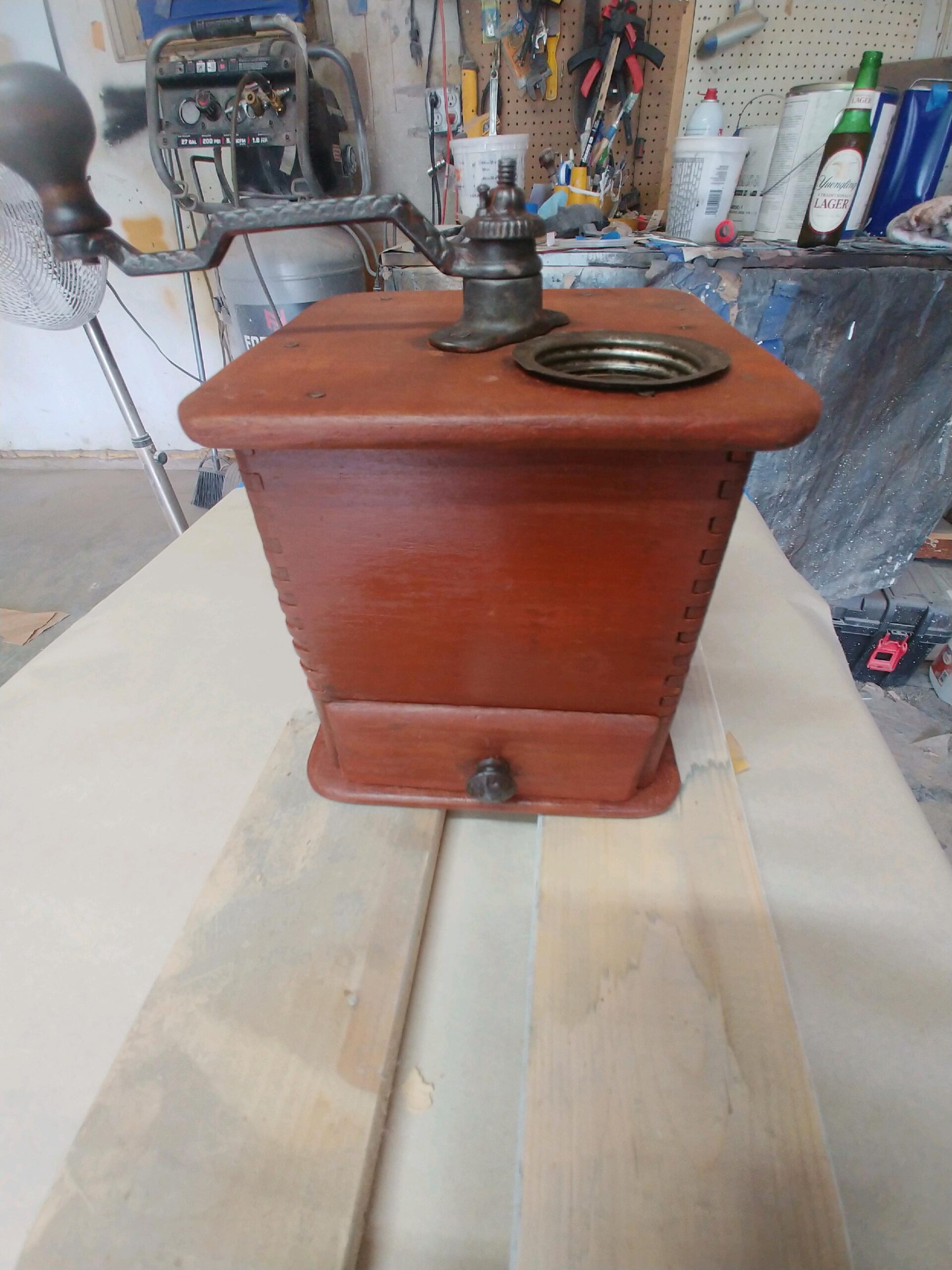
Not every restoration is a large piece of furniture. This antique coffee grinder box is a good example of why small heirlooms deserve the same careful treatment as a full-size dresser or credenza.
The Piece
A compact antique coffee grinder case, complete with its original hardware — the kind of small object that tends to get overlooked, tucked in a closet because it seems too minor to bother restoring, or too fragile to use as-is.
Why Small Pieces Still Need Expert Care
Small antiques often have thinner wood, more delicate joinery, and more original hardware per square inch than large furniture — meaning less room for error. A heavy-handed sanding pass or generic refinish can erase detail on a small piece far faster than on a dresser or table.
Before & After
The finished piece brings back a warm, even wood tone and working hardware, while preserving the box’s original proportions and joinery. It’s now a display-worthy piece rather than a box in storage.
Small Heirlooms Are Worth Restoring Too
Boxes, grinders, small trunks, and other compact antiques are often the most affordable restorations we do, and they make excellent gifts or shelf pieces once finished. See our antique restoration services or send us a photo of your piece for a free estimate.
Send Us a Photo for a Free Estimate
Have a small antique that needs attention? Send a few photos using the form below and we will tell you exactly what it needs, what we would do, and what it would cost. Estimates are free, and pickup and delivery are available across the Dallas area.
The English Refinisher – fine wood and furniture refinishing, by hand in Dallas, Texas. Serving Dallas, Wylie, and surrounding communities by appointment.
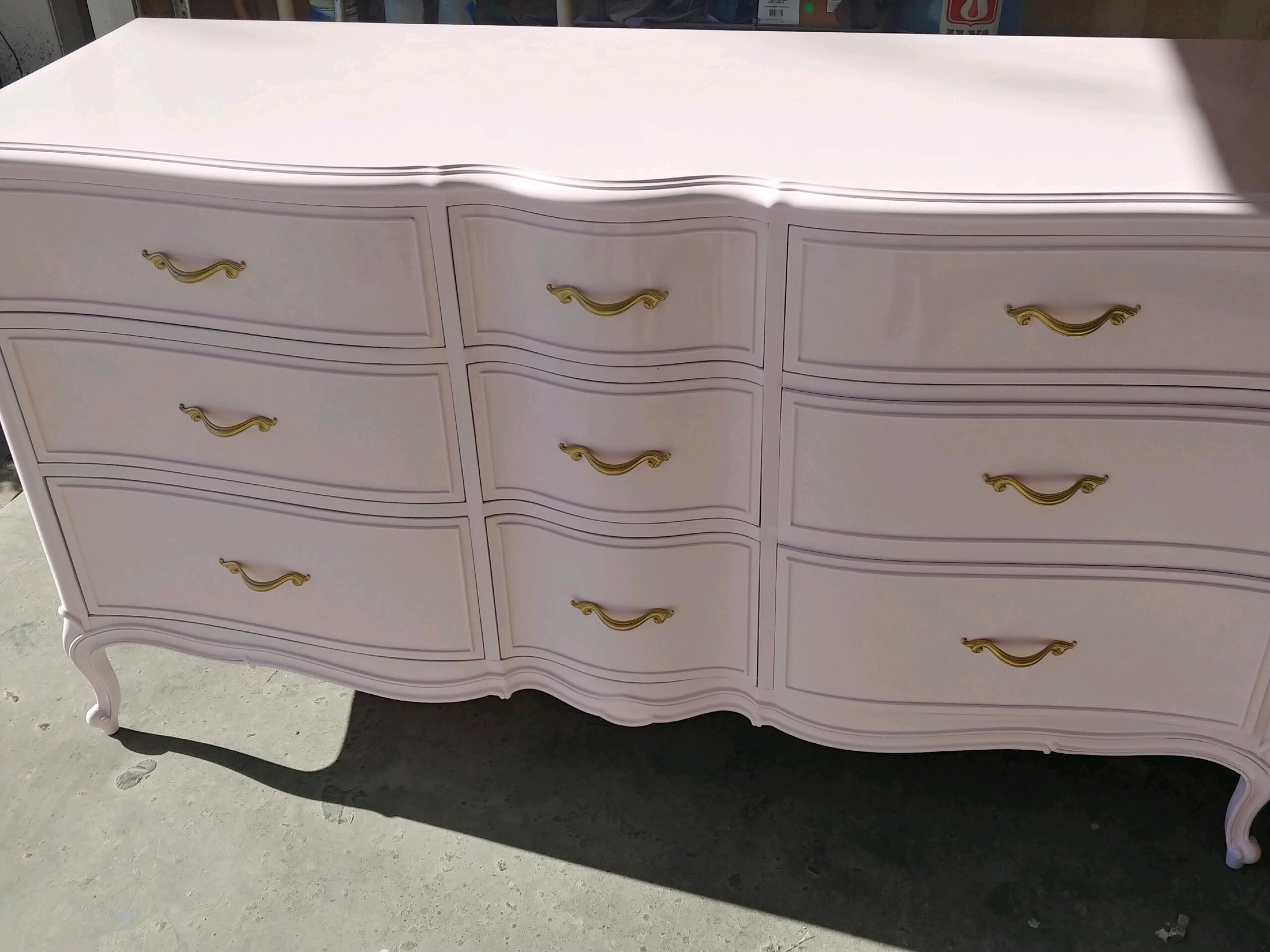
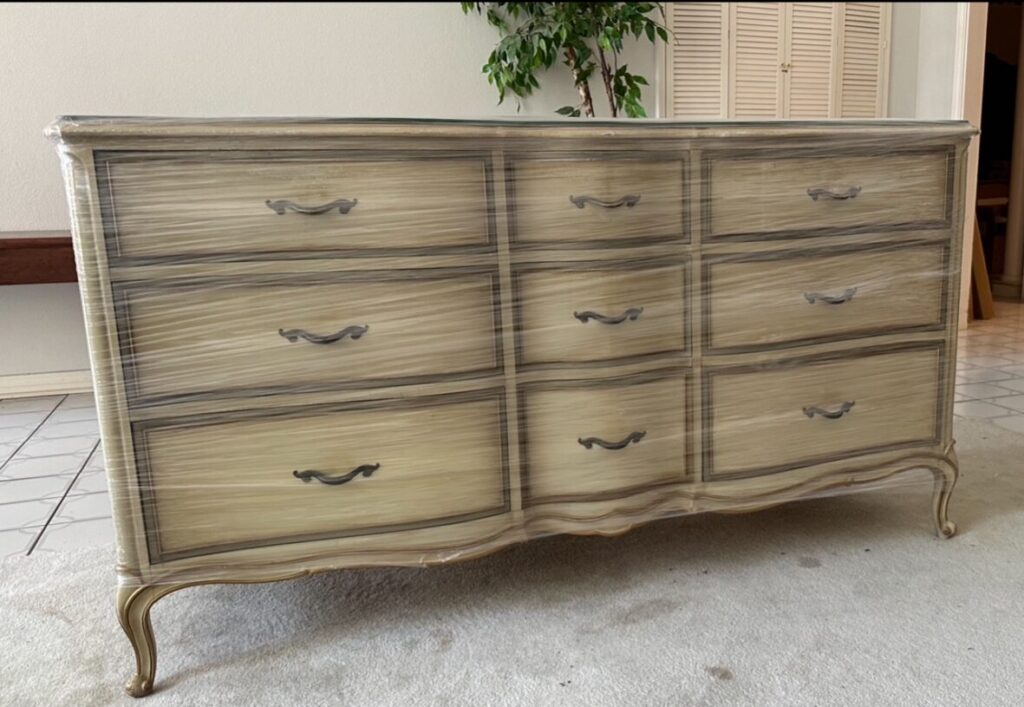
French provincial furniture and soft, contemporary color palettes work better together than you might expect. This serpentine-front dresser is a good example of updating a traditional silhouette without losing what makes it French provincial in the first place.
The Piece
Nine drawers, a curved serpentine front, and ornate brass swan-neck pulls — this dresser has all the hallmarks of classic French provincial design. Pieces like this are common in Dallas estate sales and hand-me-downs, usually finished in a dated stain or an already-tired white paint.
Why Blush
We chose a soft blush lacquer to keep the piece feeling traditional and feminine without defaulting to the expected white or cream. Blush works particularly well on French provincial case pieces because the color softens the ornate carving and curves instead of competing with them — and it pairs easily with the brass hardware, which we cleaned and reinstalled rather than replaced.
Keeping the Original Character
The serpentine drawer fronts, applied molding, and cabriole-adjacent legs were all preserved exactly as built — this is a refinish, not a redesign. The goal was a color update, not a different piece of furniture.
Is Blush Right for Your Piece?
Blush, sage, and soft blue are the three colors we’re asked for most often on traditional and French provincial furniture right now. See our custom painting & lacquer services or send us a photo of your dresser for a free color consultation.
Send Us a Photo for a Free Estimate
Have a dresser or painted piece that needs attention? Send a few photos using the form below and we will tell you exactly what it needs, what we would do, and what it would cost. Estimates are free, and pickup and delivery are available across the Dallas area.
The English Refinisher – fine wood and furniture refinishing, by hand in Dallas, Texas. Serving Dallas, Wylie, and surrounding communities by appointment.
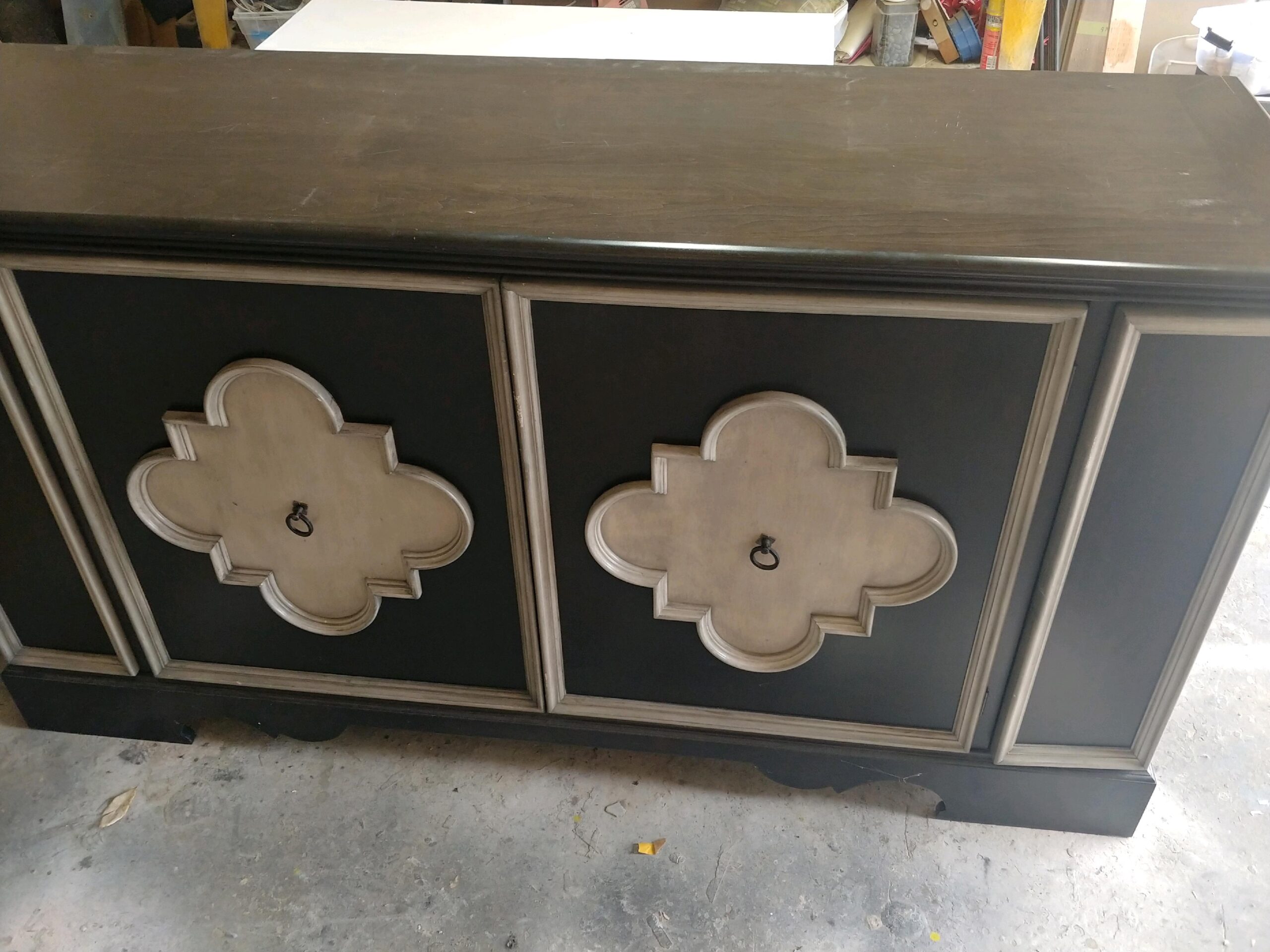
Same cabinet, two completely different personalities. We refinished this carved quatrefoil-front cabinet in two color stories — a moody slate blue and a black-and-taupe two-tone — to show clients how much color alone can change a piece’s character.
The Cabinet
This case piece features a carved quatrefoil (four-lobed) panel design on its cabinet doors, paired with statement brass ring pulls — details that are made to be shown off with the right finish, and easily lost with the wrong one.
Version One: Slate Blue Lacquer
Finished in a deep, slightly gray-toned blue with a glossy lacquer topcoat, this version leans traditional-meets-moody — the kind of piece that works as a statement bar cabinet or a dining room accent. The restored brass hardware pops against the dark, saturated color.
Version Two: Black & Taupe Two-Tone
The same carved doors read completely differently in black with taupe detailing worked into the quatrefoil recesses — the carving becomes more graphic, almost architectural, rather than soft and traditional.
The Takeaway: Color Direction Matters as Much as Craftsmanship
Both finishes required the same prep and lacquer-grade spray work — the entire difference in feel comes from the color decision. This is why we spend real time on color consultation before ever picking up a sprayer: the “right” finish depends entirely on the room it’s going into.
Have a Carved or Detailed Cabinet?
Pieces with carved paneling, fretwork, or fluting are ideal candidates for a bold lacquer finish, since a sprayed finish keeps every detail crisp. See our painting & lacquer services or send us photos for a free color consultation.
Send Us a Photo for a Free Estimate
Have a cabinet that needs attention? Send a few photos using the form below and we will tell you exactly what it needs, what we would do, and what it would cost. Estimates are free, and pickup and delivery are available across the Dallas area.
The English Refinisher – fine wood and furniture refinishing, by hand in Dallas, Texas. Serving Dallas, Wylie, and surrounding communities by appointment.
Two-tone furniture — a painted base paired with a natural or stained wood top — is one of the most requested finishes we do right now. It gives a piece a custom, designer look without committing to an all-over paint color.
What “Two-Tone” Actually Means
Rather than painting an entire dresser, table, or console one color, we finish the case and drawer fronts in a painted color and leave (or refinish) the top in natural or stained wood. It’s a finish choice popularized by high-end furniture makers, and it works because it lets the wood grain and the color both get a moment to shine.
Why Homeowners Like It
It’s more forgiving than an all-paint or all-stain choice — a two-tone piece tends to work with more room palettes
It highlights good wood — if a tabletop has beautiful natural grain, painting over it would be a waste; two-tone lets you keep it
It reads as custom — most retail furniture doesn’t offer this combination, so a two-tone piece looks bespoke rather than off-the-shelf
How We Execute a Two-Tone Finish
The wood top is masked and refinished separately from the case — usually stained or clear-coated to bring out the grain — while the case and drawer fronts are sprayed in the chosen paint color. Getting a clean, sharp line between the two finishes is the hardest part, and it’s where a sprayed, professional finish shows its value over a DIY approach.
Considering a Two-Tone Refinish?
This works especially well on dressers, console tables, and credenzas with a solid wood or nice-grain top. See our painting & lacquer services or send us photos of your piece for color ideas.
Send Us a Photo for a Free Estimate
Have a piece you are considering in two tones that needs attention? Send a few photos using the form below and we will tell you exactly what it needs, what we would do, and what it would cost. Estimates are free, and pickup and delivery are available across the Dallas area.
The English Refinisher – fine wood and furniture refinishing, by hand in Dallas, Texas. Serving Dallas, Wylie, and surrounding communities by appointment.
If your outdoor teak furniture has turned silvery-gray, that’s not damage — it’s oxidation, and it’s fixable. Here’s what Dallas homeowners should know about keeping (or restoring) that classic golden teak color through Texas summers.
Why Teak Turns Gray in Dallas Heat
Teak’s natural oils protect it from rot and insects, which is why it’s the standard for outdoor furniture. But UV exposure breaks down the surface oils over time, and Dallas gets more intense, sustained summer sun than most of the country. Within a year or two of full sun exposure, unfinished teak fades from golden brown to silvery gray — a cosmetic change, not a structural one.
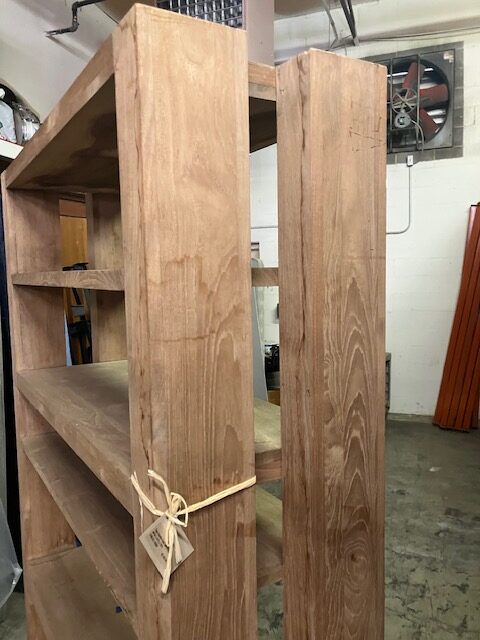
Case Study: A Raw Teak Shelving Unit
This solid teak shelving unit shows the “before” side of that equation — dry, thirsty wood with almost no color depth. After sanding and a professional finish application, the same wood shows its true warm, golden tone. The wood didn’t change; the finish did.
Why We Don’t Use Teak Oil or Standard Varnish
Most advice online tells homeowners to reach for teak oil, a generic sealer, or exterior varnish. We don’t use any of them on the teak furniture we restore, and here’s why:
Teak oil looks great for a few weeks, then starts fading and needs reapplication every 6–12 months in Dallas’ full sun — it’s a maintenance cycle that never ends, and results vary a lot depending on how it’s applied.
Generic exterior varnish or polyurethane doesn’t flex with Texas’ heat and humidity swings. It cracks, peels, and often ends up looking worse than the bare, weathered wood it was meant to protect.
Our Approach: A Commercial-Grade Waterborne Finish
For outdoor teak, we apply a professional-grade waterborne finish imported from Italy — the kind of product used in commercial and marine applications, not sold off the shelf for DIY use. It’s built to hold up to exactly the conditions Dallas throws at outdoor furniture: intense UV, heat, and humidity swings.
Compared to teak oil or standard varnish, it holds its golden color longer, resists cracking and peeling, and needs far less frequent maintenance. Applied correctly — after proper sanding and prep — it’s the longest-lasting, best-looking option we’ve found for teak that lives outside in Texas.
This isn’t a product you’ll find at a typical hardware store, and getting the application right (surface prep, coat count, cure time) is what separates a finish that lasts years from one that fails in a season.
Ready to Restore Your Teak Furniture?
If your teak patio furniture has gone gray, or you want it protected before it does, we’d like to take a look. Drop your pieces off at our shop, or we can arrange pickup and delivery for you at cost — a good option for larger patio sets and pieces that are awkward to transport. See our outdoor teak refinishing services or send us photos of your patio furniture for a free estimate.
Send Us a Photo for a Free Estimate
Have a outdoor teak set that needs attention? Send a few photos using the form below and we will tell you exactly what it needs, what we would do, and what it would cost. Estimates are free, and pickup and delivery are available across the Dallas area.
The English Refinisher – fine wood and furniture refinishing, by hand in Dallas, Texas. Serving Dallas, Wylie, and surrounding communities by appointment.