
A German-made oak dining table came into the shop wearing its original finish, worn and uneven after decades of use. The first stage of bringing it back was stripping the top all the way down to bare wood, ready for a fresh finish.
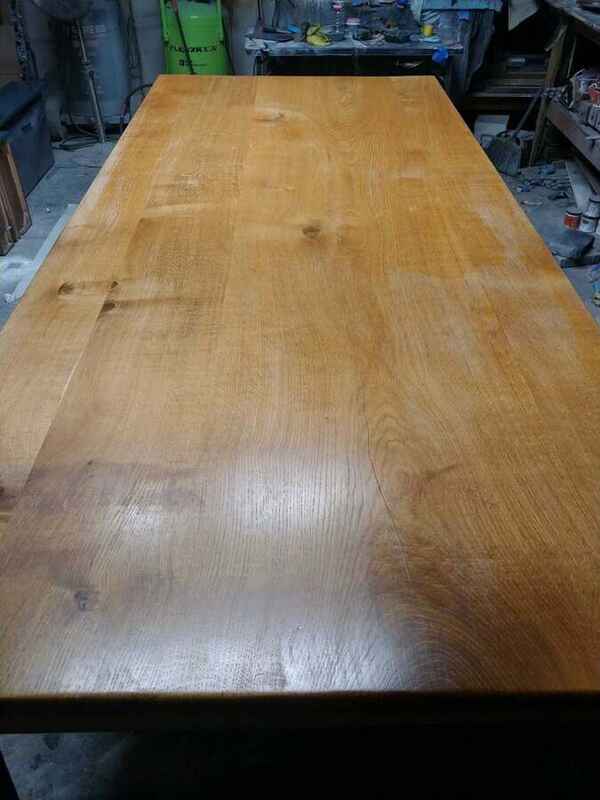
Before: the table as it arrived, in its original worn finish.
Stripping a finish like this properly means carefully stripping and hand sanding the wood to make sure every trace of the old finish is removed, leaving a clean, even surface. It is a slower, more careful process by hand than it looks, but it is what preps the wood for a consistent staining process next.
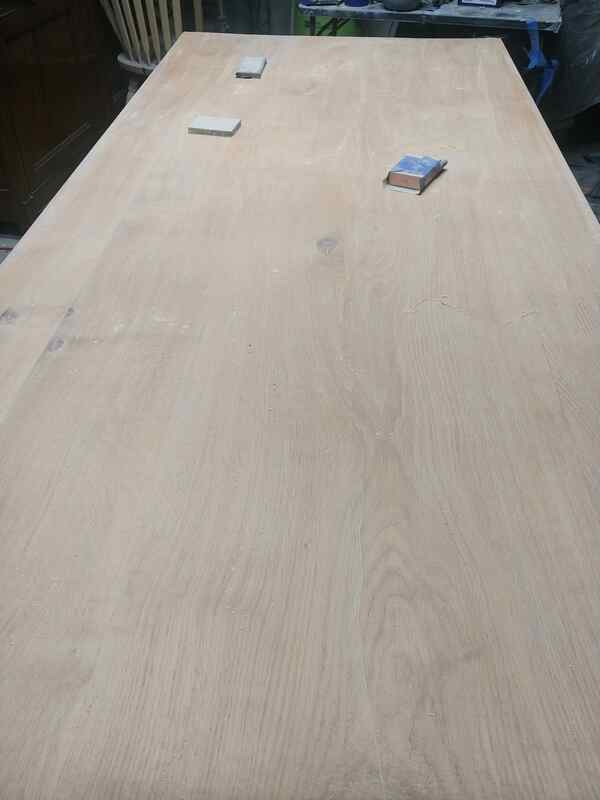
Midway through: the top sanded back to bare oak, ahead of a final pre-sanding pass prior to staining.
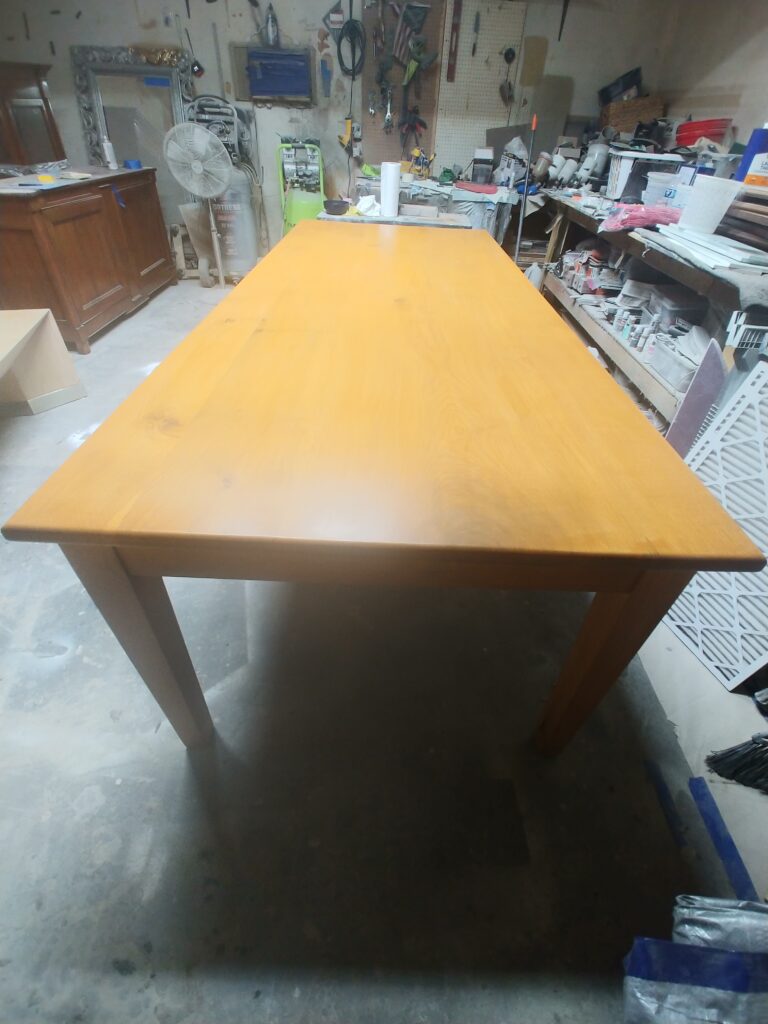
After: the same table, refinished with a hand-mixed gold ochre pigment, in keeping with how a piece like this would originally have been finished.
Gold ochre is one of the oldest pigments used in wood finishing, and getting a historically accurate version of it means mixing the pigment by hand rather than reaching for a modern equivalent off a shelf. It is worth knowing what a piece originally wore before deciding what it should wear next.
A German-made oak dining table like this one is exactly the kind of piece worth this kind of care — solid, well-built, and worth doing properly rather than rushing to the next step.
Leave a Reply