Gilding is the oldest decorative finish still practised by hand, and it is the one that separates a restored piece from a repainted one. Real gold leaf, silver, or composition (imitation leaf) — is laid onto a prepared surface in sheets thinner than a human hair. It catches light in a way paint cannot imitate, because it is not a colour. It is metal.
The English Refinisher gilds frames, mirrors, carvings, corbels, mouldings and furniture across the Dallas area. Phil trained and worked as a traditional frame maker before moving into full-time restoration, and gilded work has been part of the shop ever since.
This page showcases just a brief selection of gilding to show the capabilities of the shop.
A Gilded Overmantel Carving: Before and After
This carved overmantel — two cherubs flanking a lion with scroll, faux painted in an old painted finish. From a few feet away the carving read as a single dark mass; the modelling in the faces, the drapery and the scrollwork had effectively disappeared.
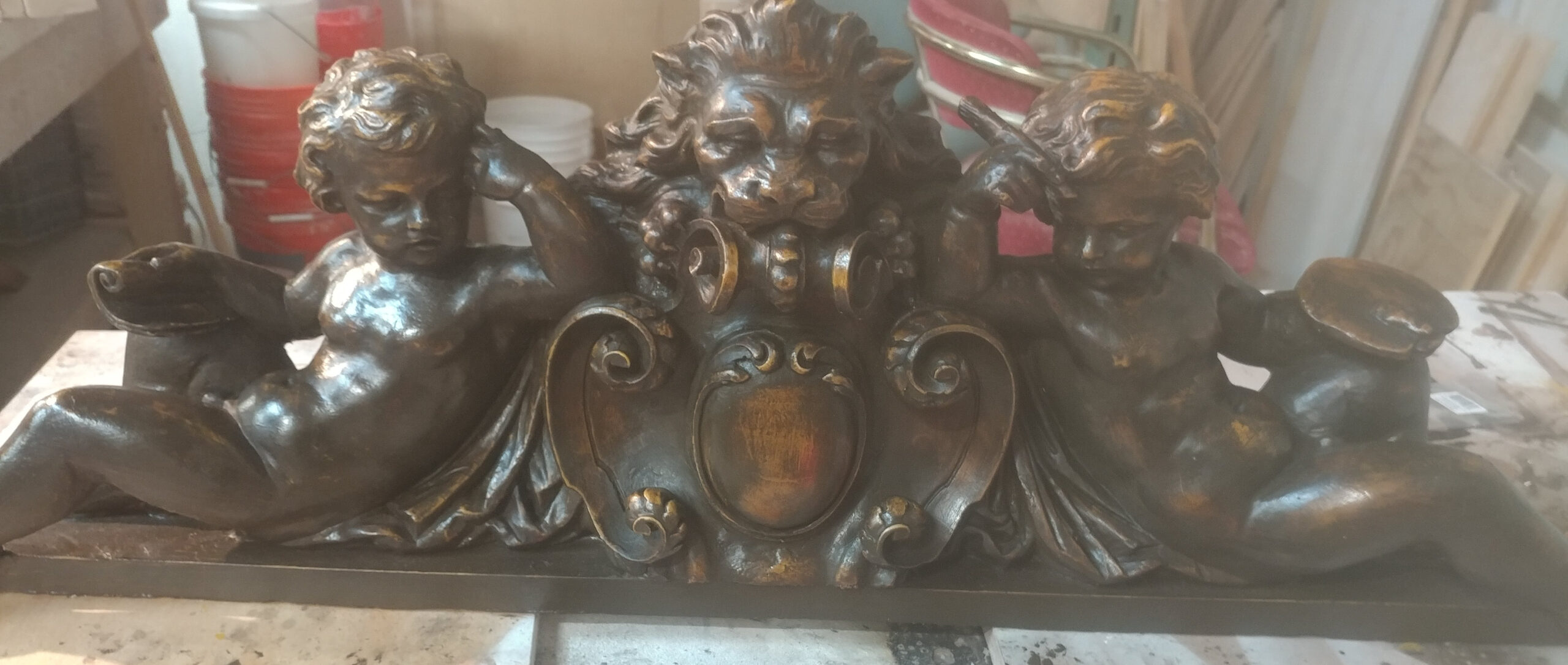
That is the part worth understanding about a piece like this. Nothing was carved away and nothing was missing. What it had lost was its ability to hold light, and on a deeply modelled carving that loss reads as though the sculpture itself has gone flat.
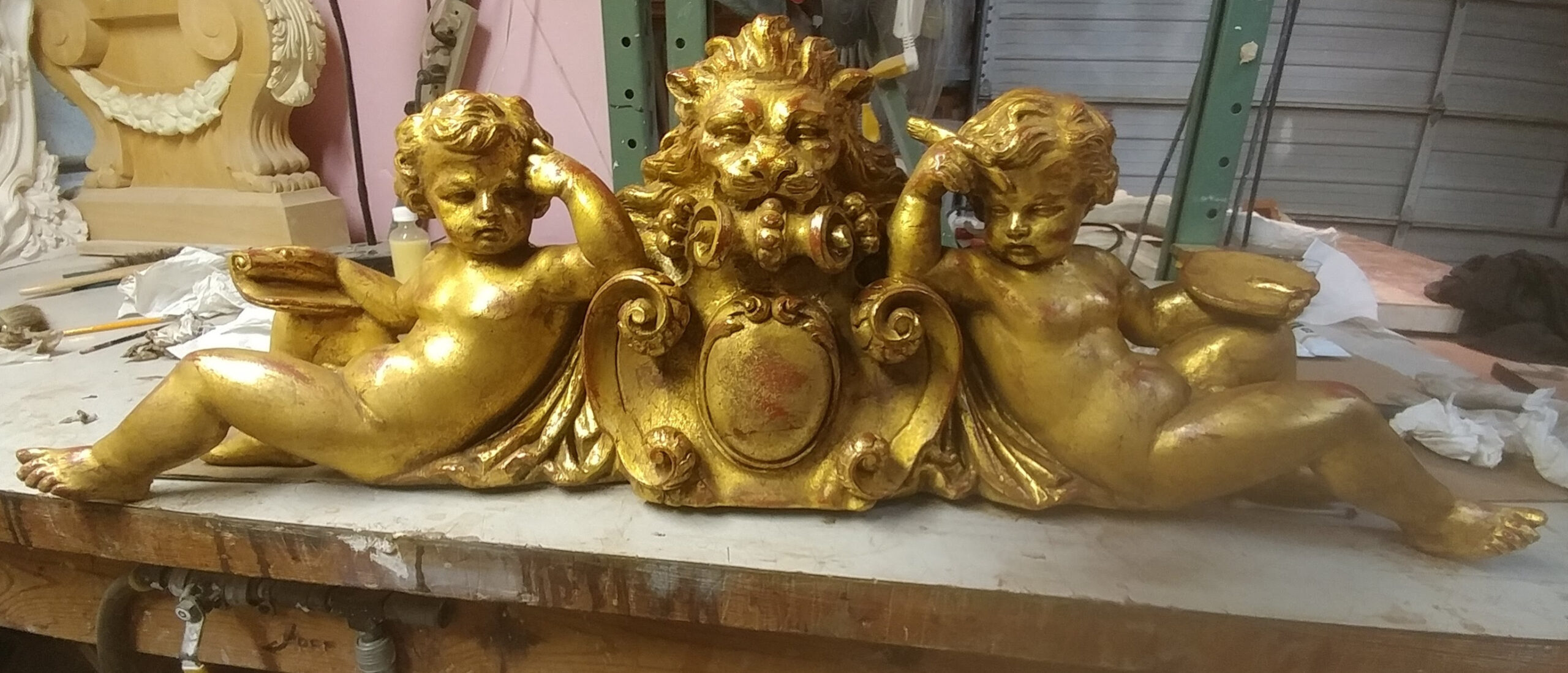
Gilded, the carving comes back. The faces have expression again, the drapery has folds, and the lion mask reads as a lion rather than a shadow. Note that the recesses and the raised forms carry the leaf differently — that variation across the surface is what gives gilded carving its depth, and it is exactly what a coat of gold paint on the same piece would flatten out.
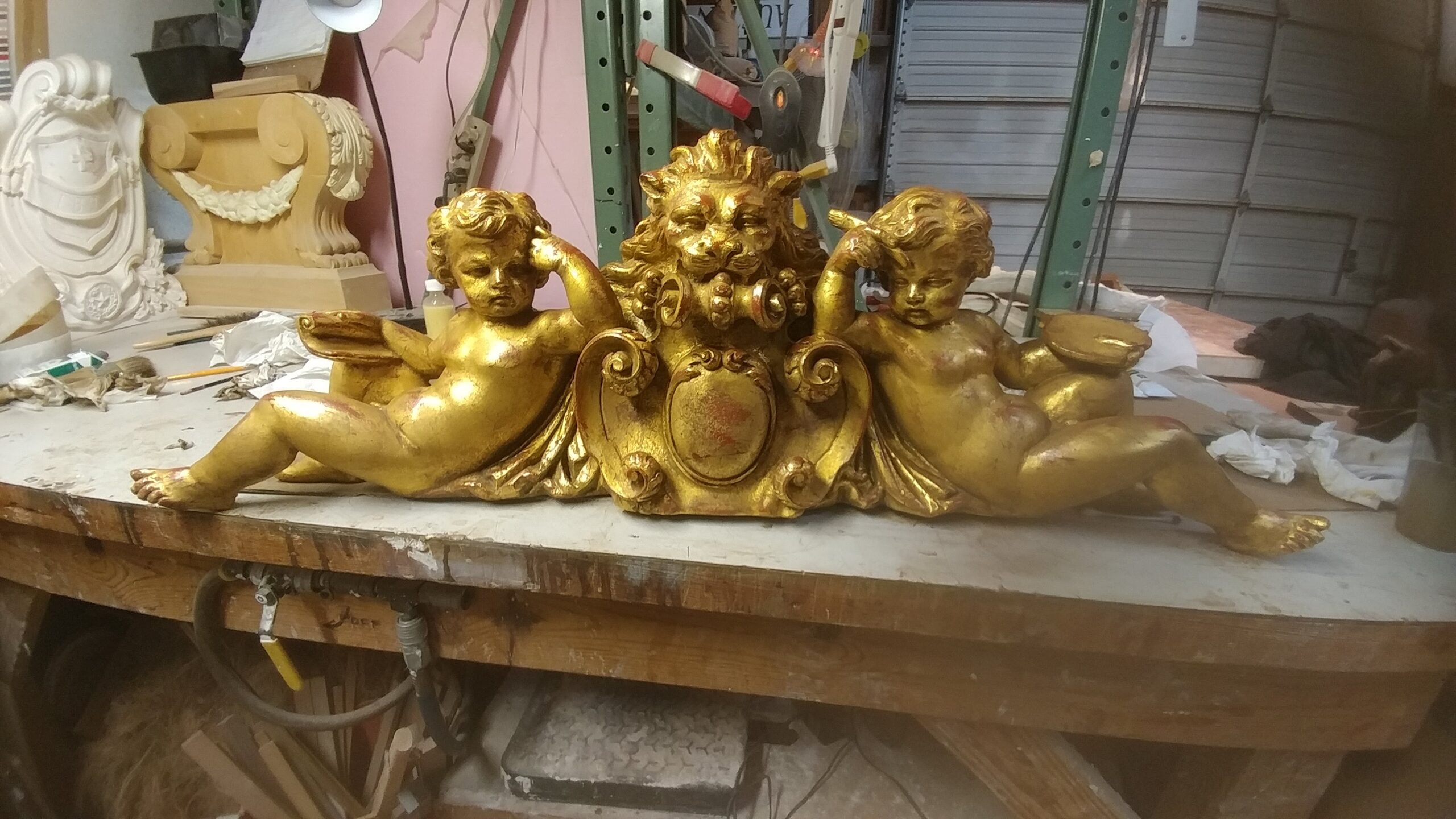
The finish was toned and aged rather than left bright. A brand-new-looking gold surface on an architectural carving tends to announce itself; the goal here was a piece that looks as though it has been in place a long time.
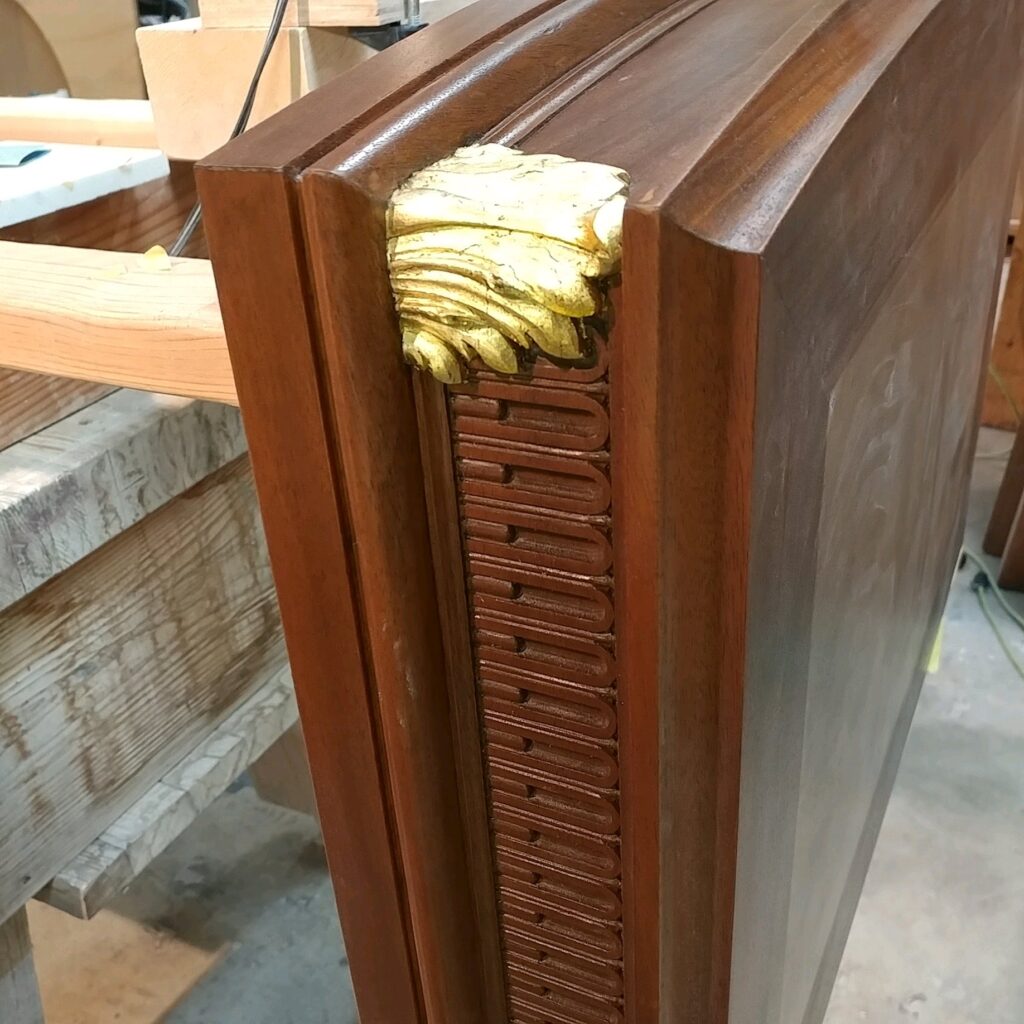
Corner Samples and Reference Pieces
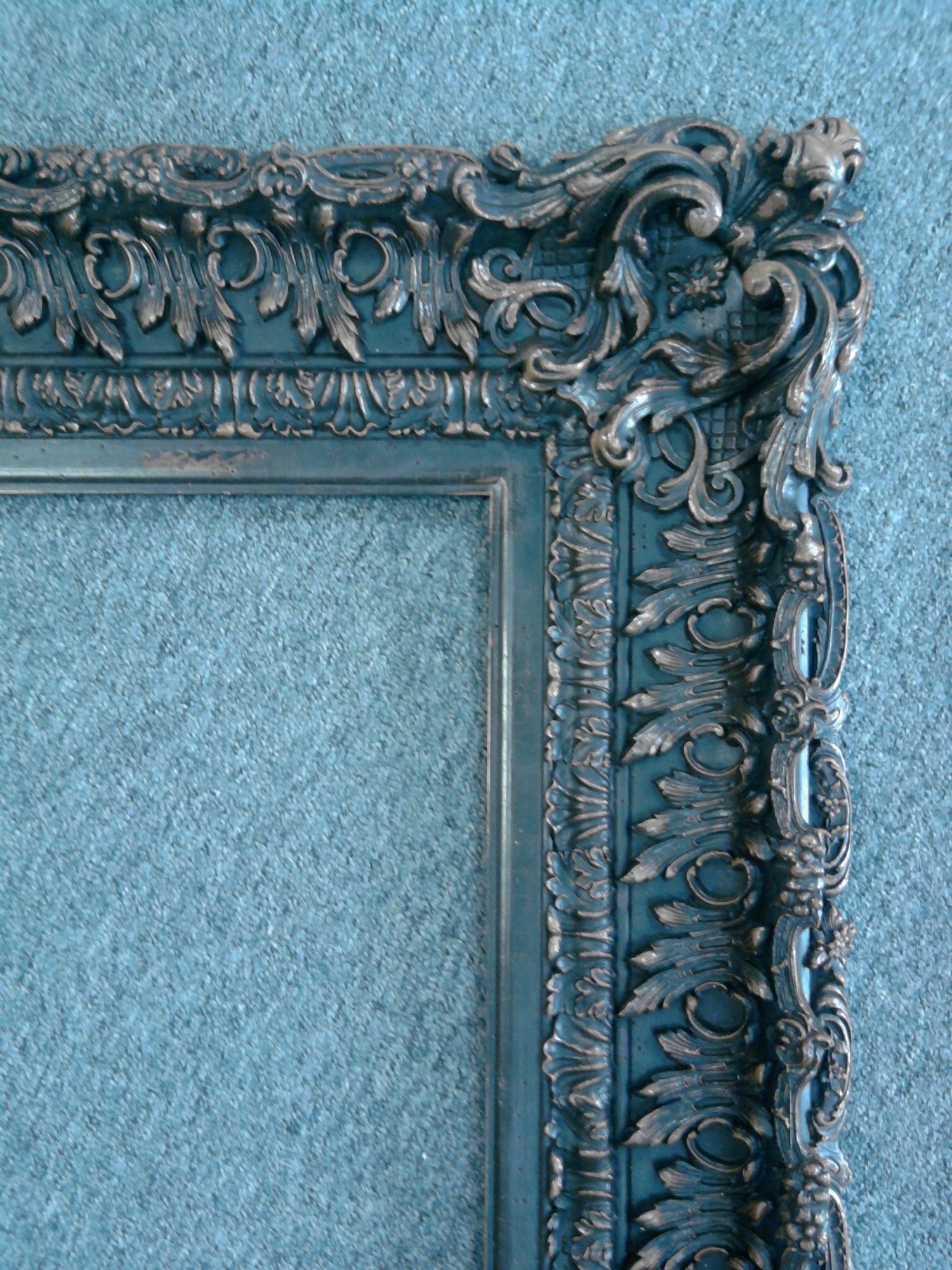
Phil worked as a frame maker before moving into full-time restoration, and several of the samples below are his own original designs from those years. They are kept in the shop as reference for what a gilded surface can be finished to — the range runs a long way further than “gold” or “silver.”
Antique Silver Leaf on a Chippendale Corner
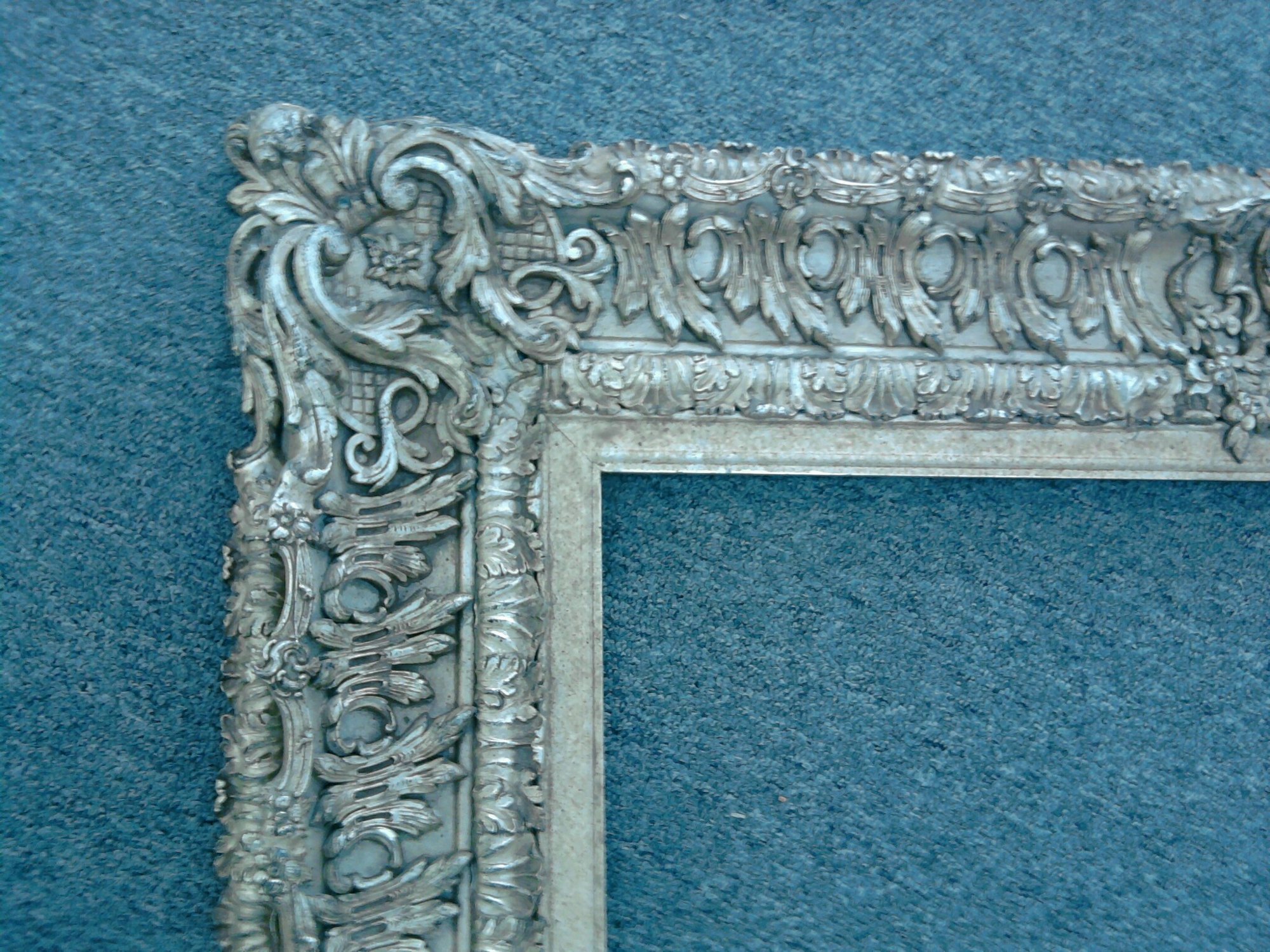
Antique silver leaf applied over a Chippendale corner sample, then aged and antiqued. Silver is often passed over in favour of gold, but against cooler paint colours and in rooms with a lot of daylight it does something gold cannot.
22 Karat, Water Gilded and Burnished, Left Bright
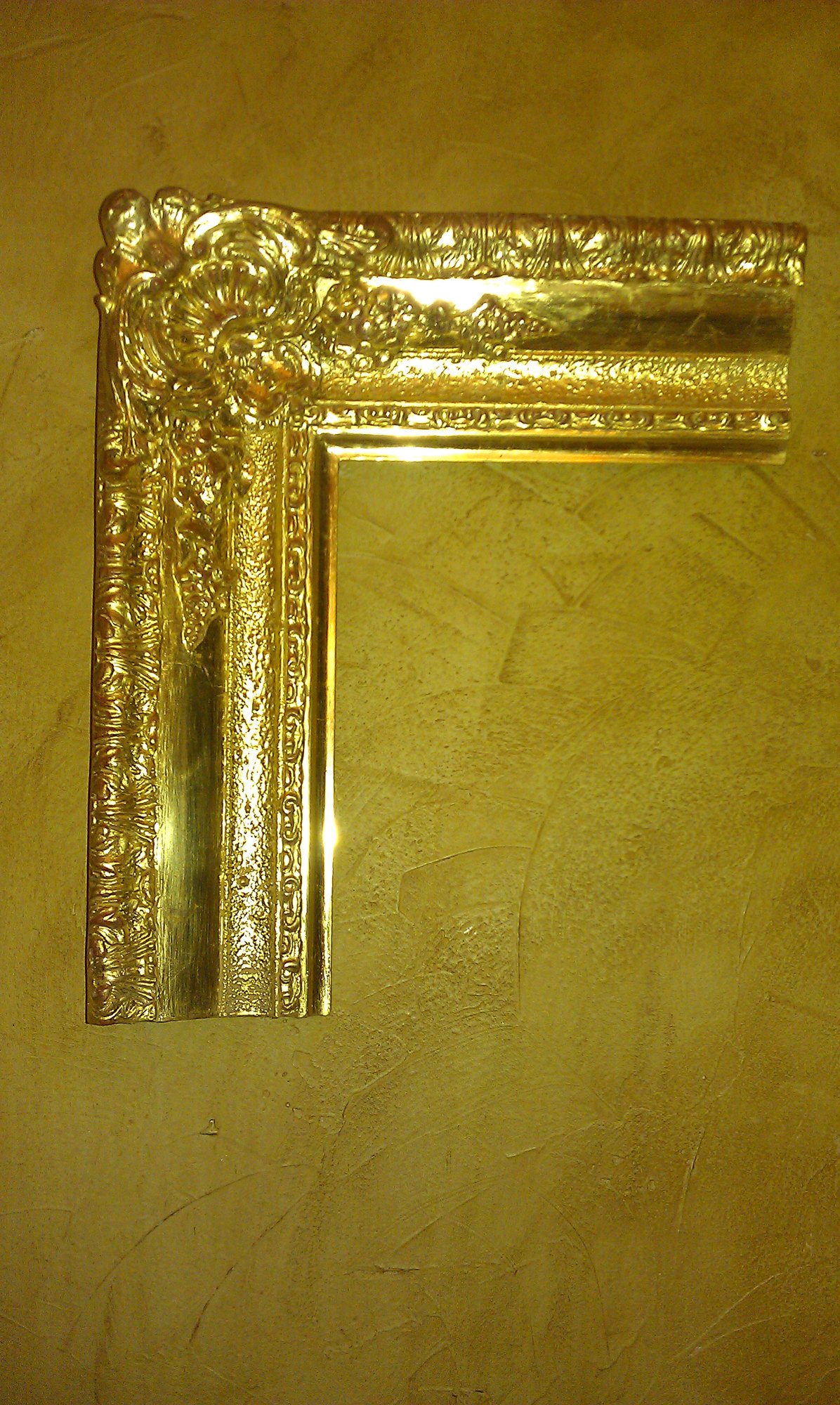
A French corner sample in 22 karat gold, water gilded and deliberately left burnished and brilliant at the client’s request. Most gilded work gets toned back so it reads as old. This one did not — and it is here as the reminder that brightness is a decision, not an oversight.
Silver Over Aged Gesso
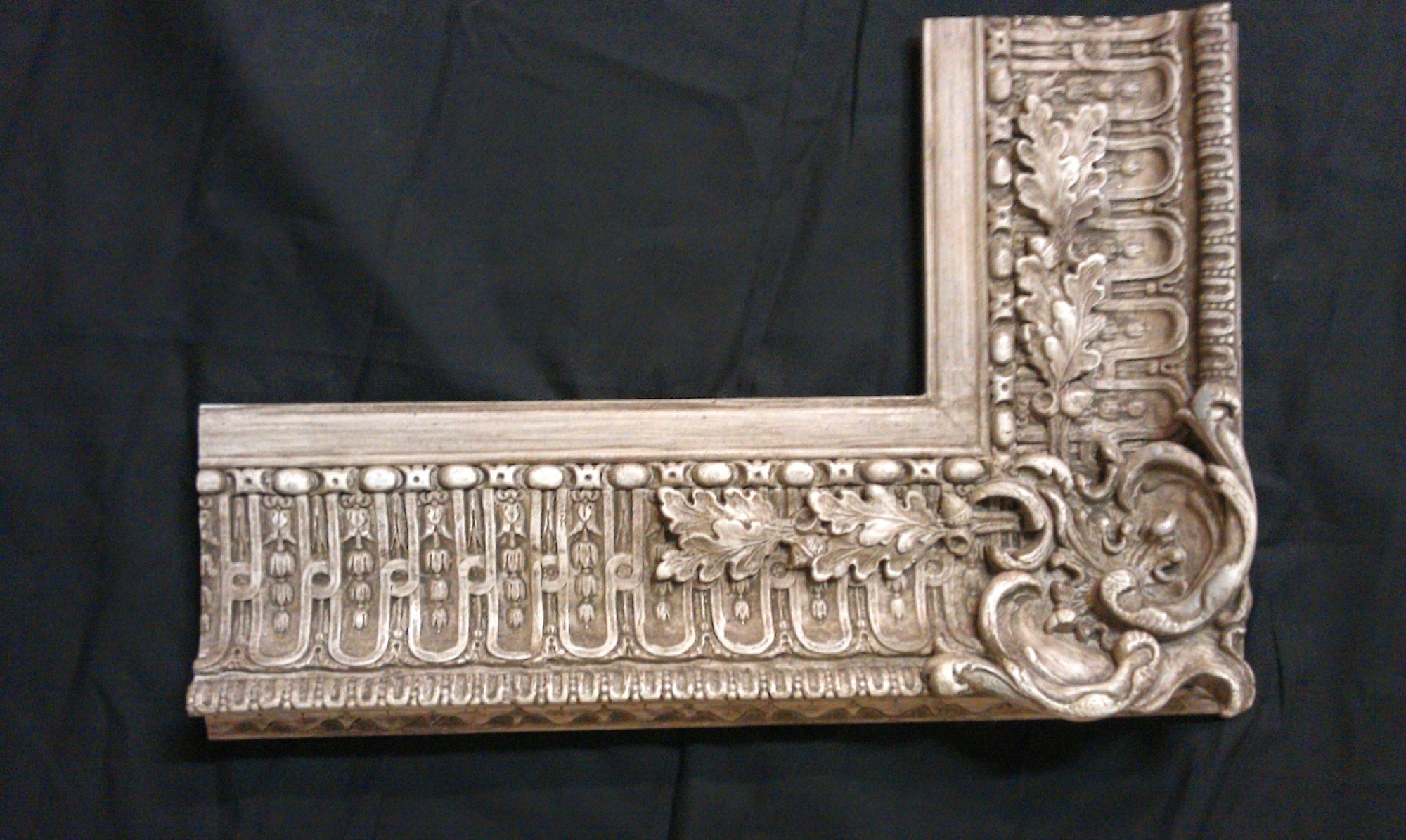
A fluted corner in silver leaf over aged gesso. The same profile in bright silver would read as modern; toned like this it reads as something that has been on a wall for a century.
Frames, Ornament and Architectural Work
Gilded Ornament Against Plain Wood
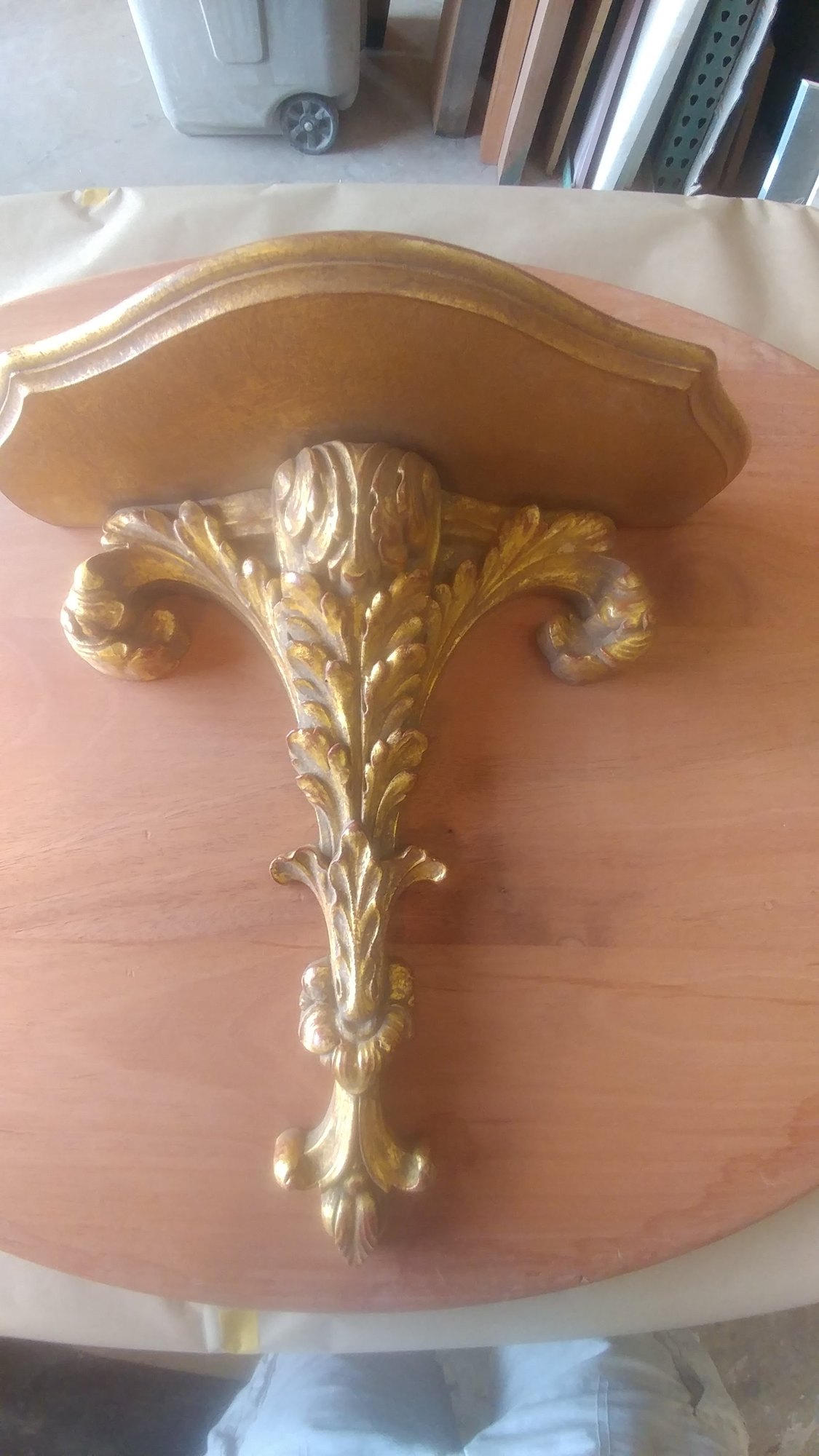
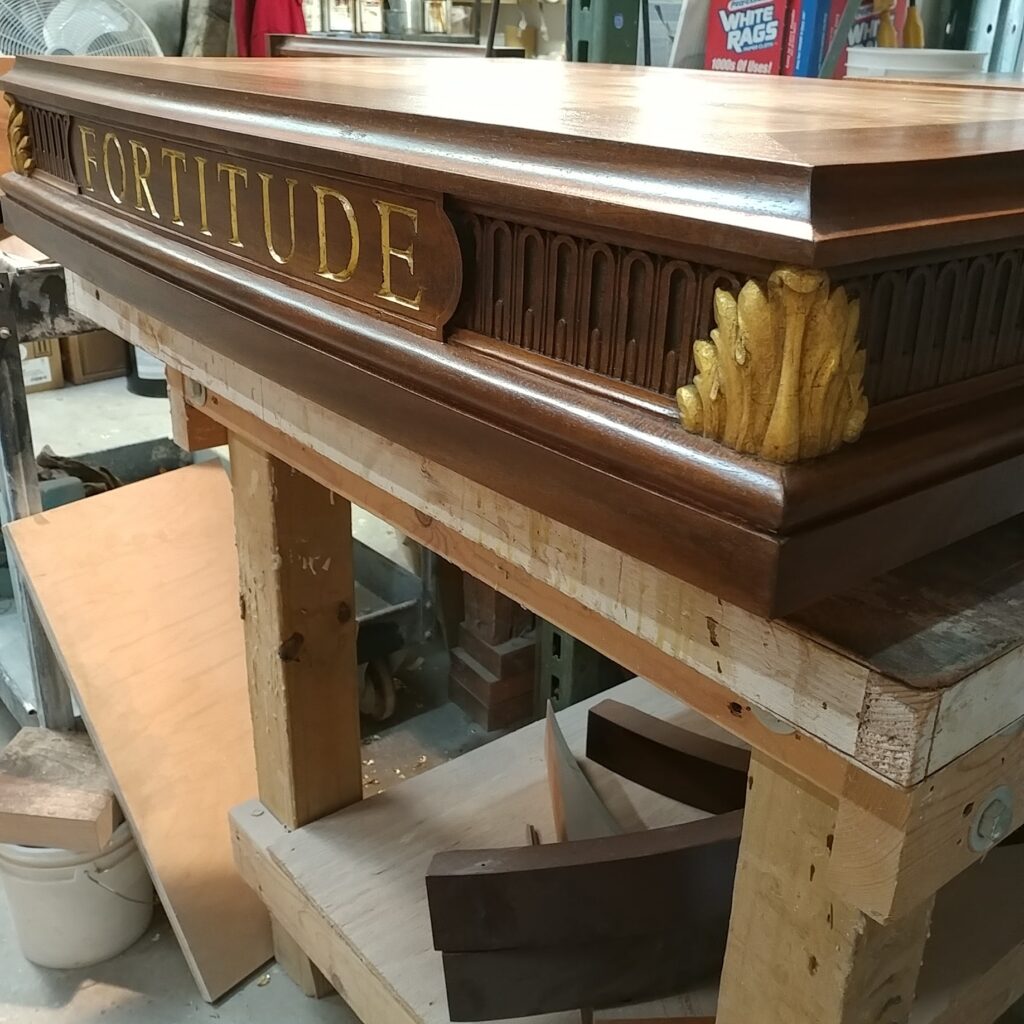
A carved bracket with its acanthus ornament gilded and the timber left plain. Set side by side like this the difference is not subtle, and it is the clearest short answer to what gilding actually does to a piece: it separates the ornament from the ground so the carving reads.
Close Work
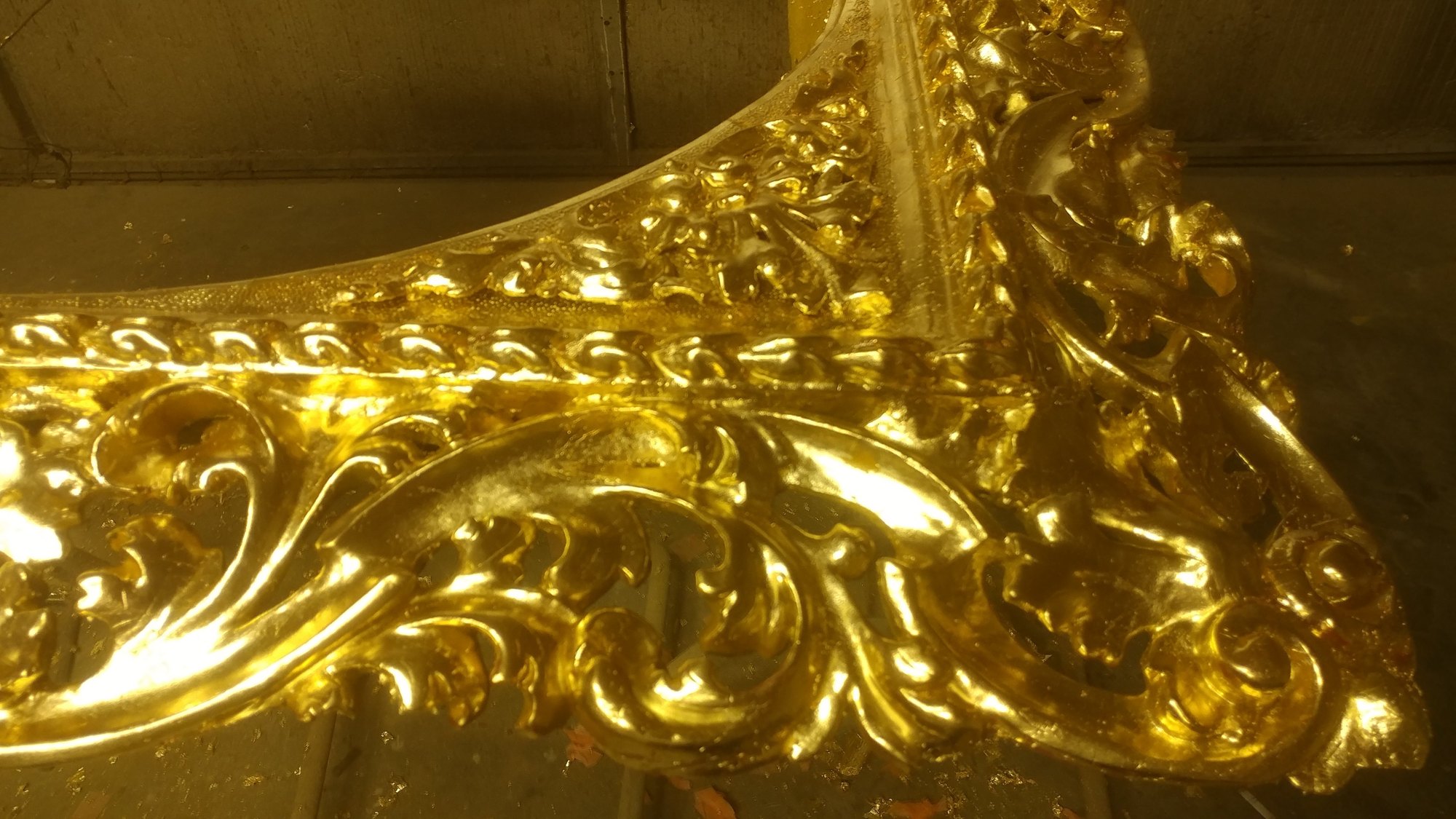
Ornament at this scale is where gilded work is either convincing or obviously not. There is no colour in this photograph doing the job — it is all refraction off metal, which is exactly what gold paint cannot reproduce.
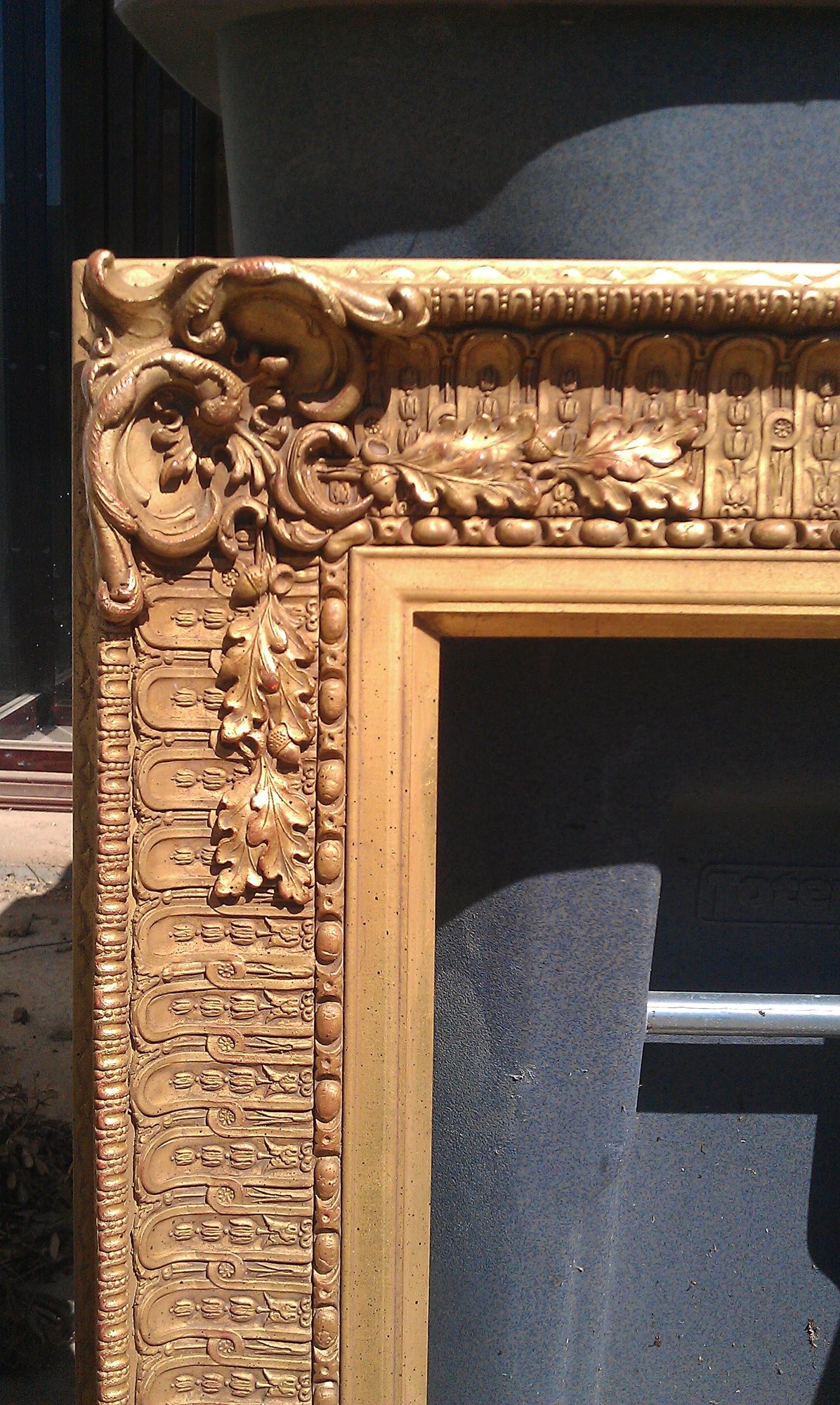
Frames Back in Service
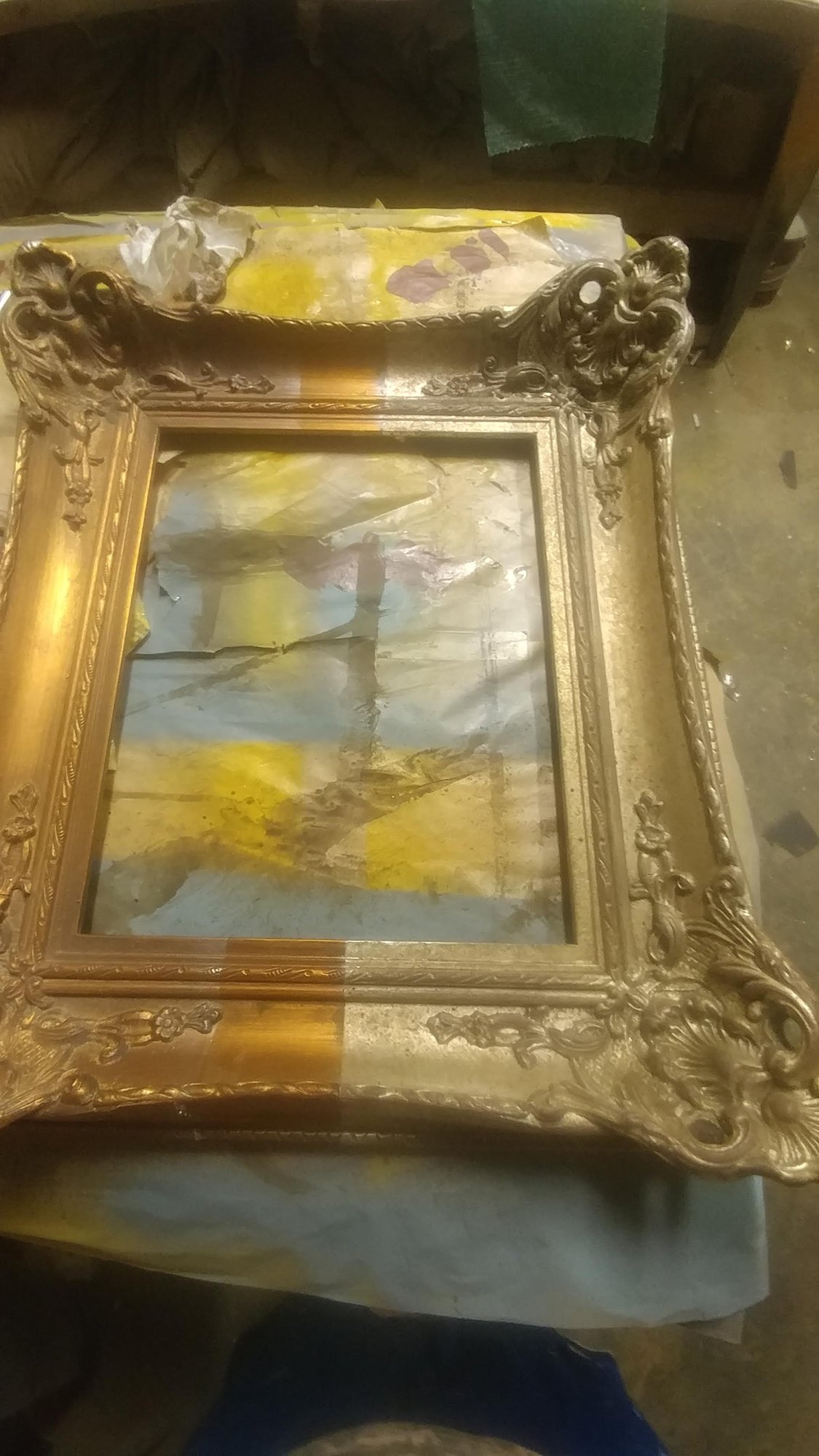
This gilded frame with spandrel started out as raw wood. Ornate composition ornament was applied and prepped for the final composition leaf, then aged and toned.
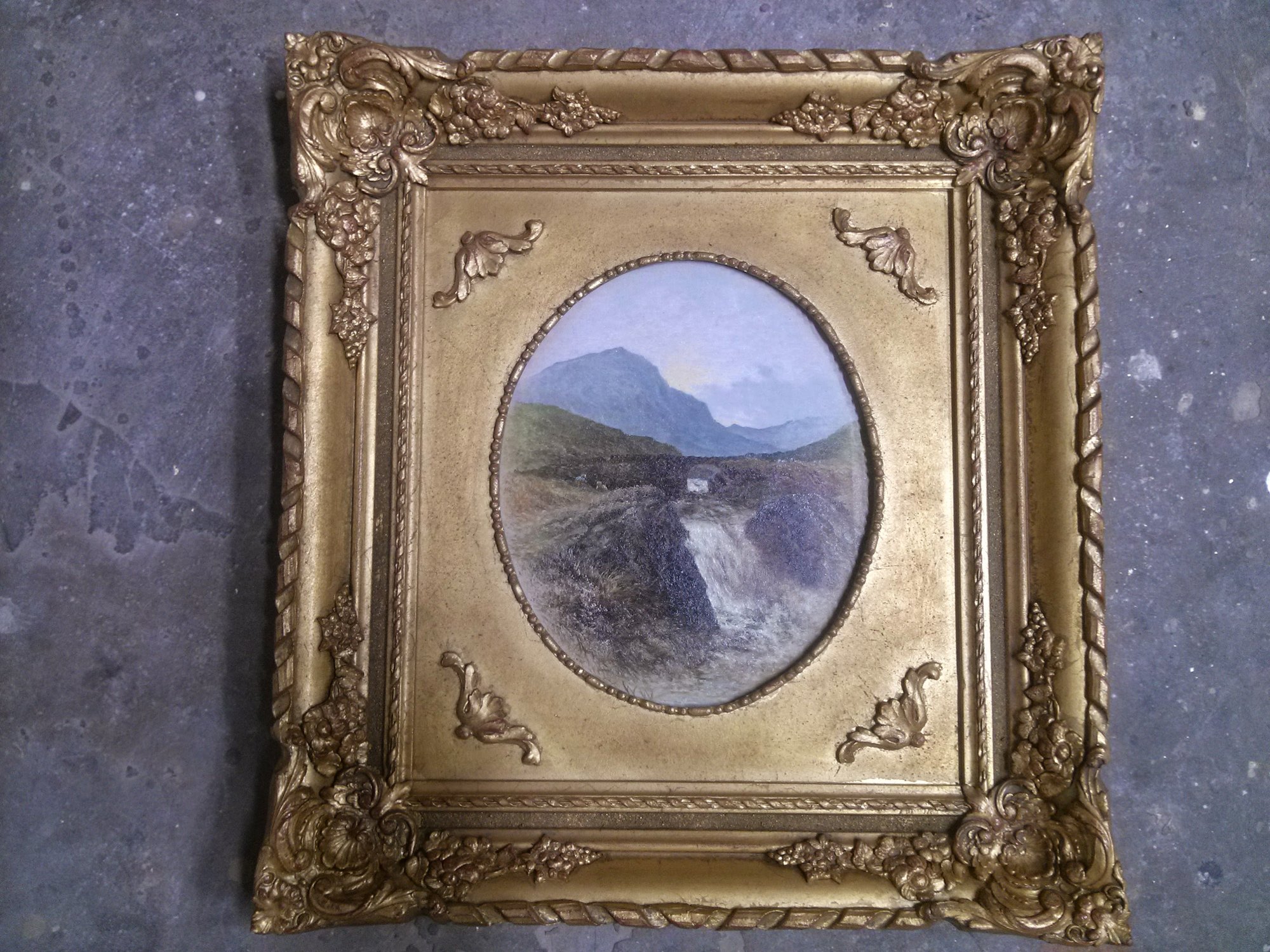
Roman Gilding / Powder Gilding
Alongside gold and silver leafing, the shop also offers Roman gilding, also known as English powder gilding, a rare technique from Victorian England. See how a demilune cabinet and its matching mirror went from flat silver paint to antiqued gold in this Roman gilding project. For everything the shop offers, see the gilding services page.
Send Us a Photo for a Free Estimate
Have a gilded frame/mirror to be re-gilded or restored, or accenting
fixtures or furniture? Send a few photos using the form below and tell us exactly what it needs. Estimates are free, and pick up/delivery are available across the Dallas and surrounding areas.
Prefer to talk it through? Call (469) 371-1468 or email Phil@TheEnglishRefinisher.com.
The English Refinisher – fine wood and furniture refinishing, by hand in Dallas, Texas. Serving Dallas, Wylie, and surrounding communities by appointment.
Leave a Reply