
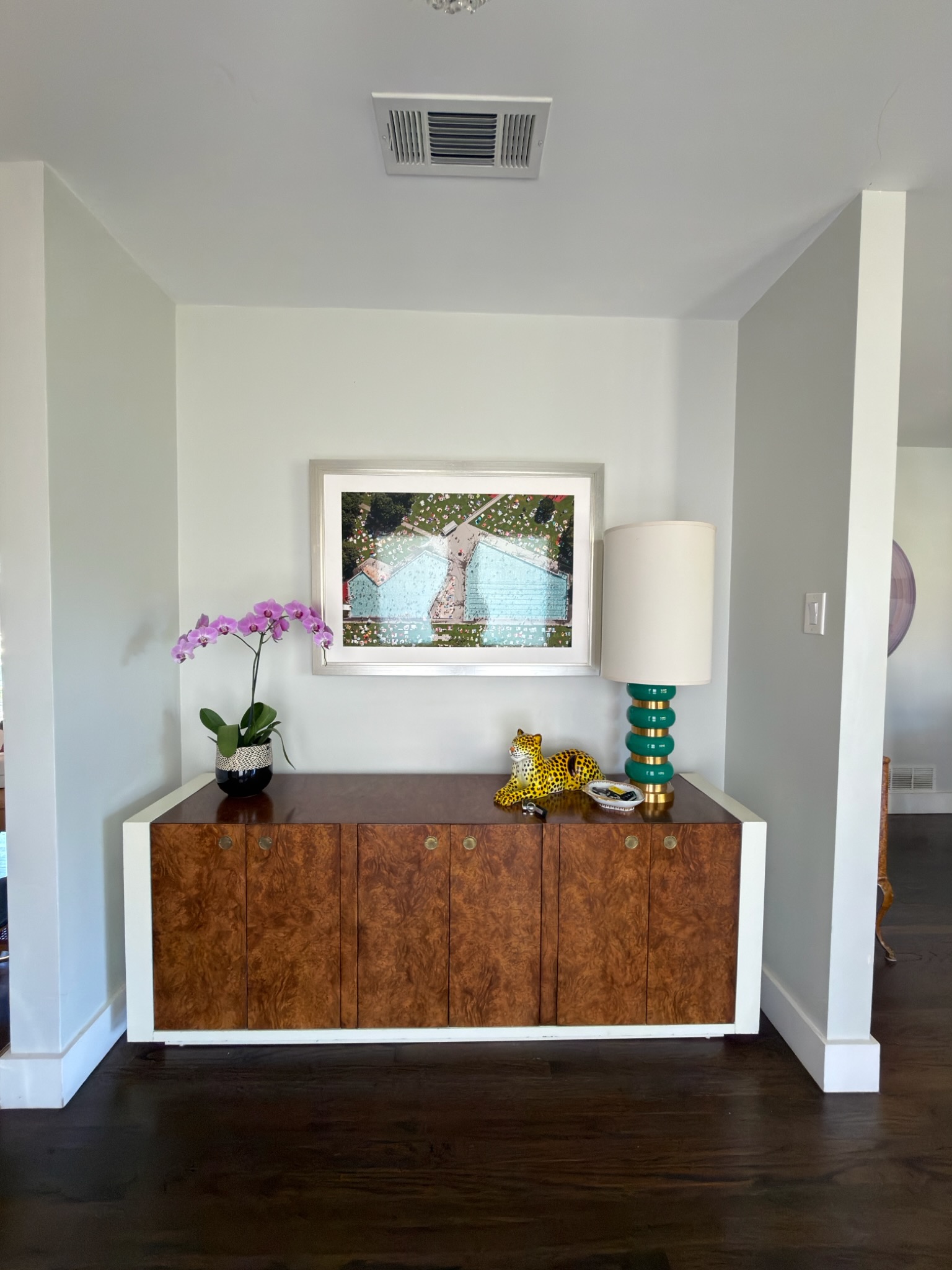
A burl wood credenza is one of the most rewarding mid-century pieces to refinish — its swirling grain pattern is unique to every piece, and a proper refinish makes that figure the focal point of a room instead of hiding it under decades of dry, faded lacquer.
The Piece: A Three-Door Burl Credenza
This project came to us with a dry, sun-faded top and cabinet fronts — the kind of dullness that makes burl wood look flat instead of showing its natural depth. The case construction was solid; the finish was the only thing holding it back.
Why Burl Wood Needs a Different Approach
Burl veneer is thin and highly figured, which means it’s easy to sand through if you’re not careful, and it can react unevenly to stain because the grain runs in so many directions at once. We approach burl refinishing more like a fine furniture restoration than a standard sand-and-stain job:
- Light, even sanding to avoid burning through the thin veneer layer
- Stain applied in test patches first, since burl absorbs unevenly across its swirling grain
- A glossier topcoat, which tends to show burl figure better than a flat or satin sheen
The Result
The finished credenza shows off the burl’s natural caramel-and-cognac tones with a glossy, glass-smooth topcoat. We styled it with brass hardware, a green ceramic lamp, and a framed print to show how a refinished mid-century credenza anchors an entry or dining space.
Considering a Similar Piece?
If you have a burl, walnut, or teak credenza that’s lost its shine, it’s very likely worth refinishing rather than replacing — solid mid-century casework like this is increasingly hard to find. See our mid-century refinishing services or send us photos for a free estimate.
Send Us a Photo for a Free Estimate
Have a mid-century piece that needs attention? Send a few photos using the form below and we will tell you exactly what it needs, what we would do, and what it would cost. Estimates are free, and pickup and delivery are available across the Dallas area.
Prefer to talk it through? Call (469) 371-1468 or email Phil@TheEnglishRefinisher.com.
The English Refinisher – fine wood and furniture refinishing, by hand in Dallas, Texas. Serving Dallas, Wylie, and surrounding communities by appointment.
Leave a Reply